
The Home-Coming
Report an issue
Tell us what's wrong and we'll take a look.
Thanks – we got it. We'll review and follow up if needed.
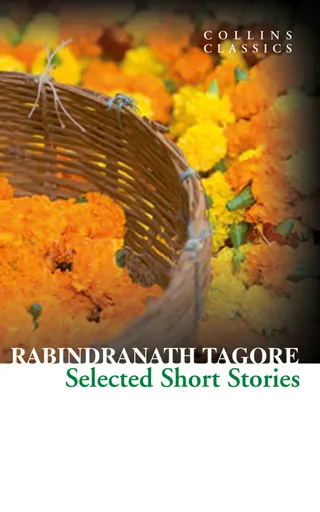
Six stories which showcase Rabindranath Tagore’s breathtaking range and empathy. The first Asian winner of the Nobel Prize, his work – written in Bengali across the late-nineteenth and early-twentieth centuries – has resonated for generations.
In ‘The Hungry Stones’, a traveller is seduced by supernatural visions in a haunted palace, while ‘The Skeleton’ gives voice to the dead in a tale of hidden passion. Tagore’s humanity shines through in ‘The Cabuliwallah’, a moving account of an unlikely friendship between a peddler and a young girl, and ‘The Home-Coming’ offers a poignant study of a boy’s longing for love. The Postmaster explores a rural orphan’s quiet devotion, while ‘Mashi’ depicts an aunt’s desperate attempts to shield her nephew from the reality of his failing marriage.
Through his stories with their recurring themes of love and heartbreak, Tagore captures both the lives of ordinary people and the common experiences of the human condition.
This series of pocket-sized paperbacks celebrates the art of the short story and marks Macmillan Collector’s Library’s 10th anniversary. Each contains a curated selection of short stories from a literary giant: Katherine Mansfield, Arthur Conan Doyle, Edgar Allan Poe, Oscar Wilde, Jane Austen, James Joyce, Virginia Woolf, Alice Dunbar Nelson, F. Scott Fitzgerald and Rabindranath Tagore.
Rabindranath Tagore
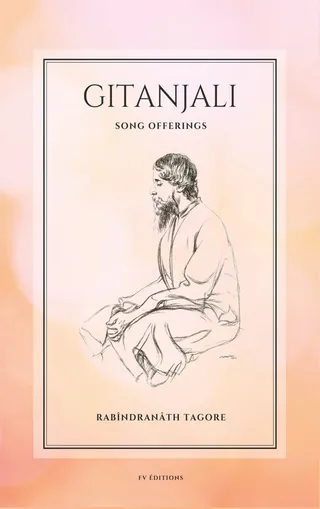
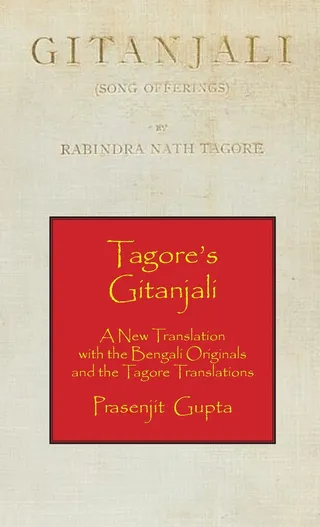
Rabindranath Tagore (1861-1941) was the youngest son of Debendranath Tagore, a leader of the Brahmo Samaj. He was educated at home and although at seventeen he was sent to England for formal schooling, he did not finish his studies there. In his mature years, in addition to his many-sided literary activities, he managed the family estates, a project which brought him into close touch with common humanity and increased his interest in social reforms. He also started an experimental school at Shantiniketan where he tried his Upanishadic ideals of education. From time to time he participated in the Indian nationalist movement, though in his own non-sentimental and visionary way; and Gandhi, the political father of modern India, was his devoted friend. Tagore was knighted by the ruling British Government in 1915, but within a few years he resigned the honour as a protest against British policies in India. Tagore had early success as a writer in his native Bengal. With his translations of some of his poems he became rapidly known in the West. In fact, his fame attained a luminous height, taking him across continents on lecture tours and tours of friendship. For the world he became the voice of India's spiritual heritage; and for India, especially for Bengal, he became a great living institution. Although, Tagore wrote successfully in all literary genres, he was first of all a poet. Among his fifty and odd volumes of poetry are Manasi (1890), Sonar Tari (1894), Gitanjali (1910), Gitimalya (1914), and Balaka (1916) . The English renderings of his poetry, which include The Gardener (1913), Fruit-Gathering (1916), and The Fugitive (1921), do not generally correspond to particular volumes in the original Bengali; and in spite of its title, Gitanjali: Song Offerings (1912), the most acclaimed of them, contains poems from other works besides its namesake. Tagore's major plays are Raja (1910), Dakghar (1912), Achalayatan (1912), Muktadhara (1922), and Raktakaravi (1926) . He is the author of several volumes of short stories and a number of novels, among them Gora (1910), Ghare-Baire (1916), and Yogayog (1929).
More by Rabindranath Tagore


Why Readwise Books?
Readwise Books is an ebook & audiobook platform that automatically logs how much you and your friends read, making it fun and easy to read more. Learn more →