Report an issue
Tell us what's wrong and we'll take a look.
Thanks – we got it. We'll review and follow up if needed.
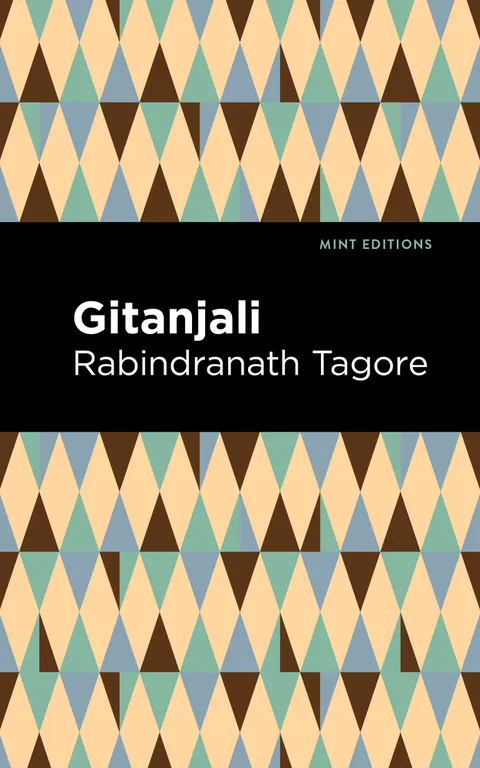
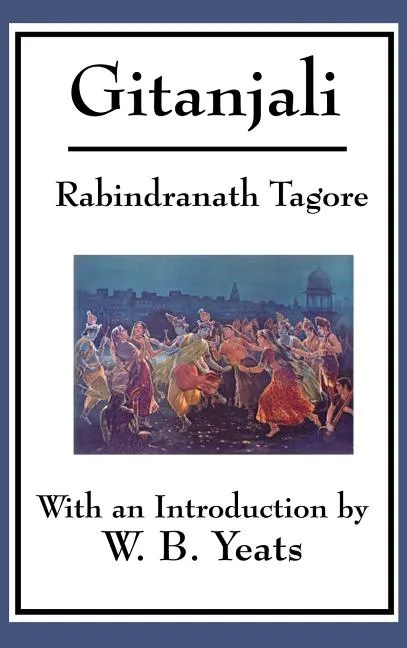
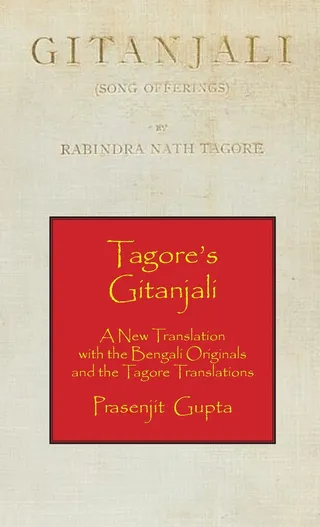
In his introduction to the 1913 edition of Gitanjali, W.B. Yeats praises Tagore as someone who “writes music for his words… he is so abundant, so spontaneous, so daring in his passion, so full of surprise, because he is doing something which has never seemed strange, unnatural, or in need of defence.” His description sits aptly for Tagore’s prose poetry in Gitanjali. Translated in English as Song Offerings, the 1912 edition had translations of 53 poems from the original 1910 Bengali edition, along with the translations of his other works. The central theme that pervades the collection of poems is that of devotion to God. The expressions exhibited in these poems range from pangs of separation from God, a sense of yearning and an unconditional waiting, and an absolute ecstasy and joy in being at service to God. Through his poems, Tagore seems to pass on the wisdom he has gained in his journey to becoming one with God, while also acknowledging and being at peace with his own mortality. Gitanjali or Song Offerings – as it is known in the West – went on to become one of Tagore’s highly regarded works, so much so that he received the Nobel Prize for Literature, largely for the translated version in 1913. The book is part of the UNESCO Collection of Representative Works. The timeless appeal of the book lies in its call for universal harmony – something that continues to resonate in the world even today.
Rabindranath Tagore
Rabindranath Tagore (1861–1941) was a Nobel Laureate in literature. (1913). He wrote successfully in all literary genres, but was, first and foremost, a poet, publishing more than fifty volumes of poetry. He wrote novels, plays, musical dramas, dance dramas, essays, travel
diaries and two autobiographies. He also left numerous drawings and paintings, and songs for which he wrote the music himself. He was the composer of the national anthem of independent India and Bangladesh. He was born in Calcutta, travelled around the world, and was knighted
in 1915. He gave up his knighthood after the Jallianwala Bagh massacre in 1919.
Among his many works are Manasi (1890), Sonar Tari (1894), Gitanjali (1910), Gitimalya (1914), Balaka (1916), The Gardener (1913), Fruit-Gathering (1916), The Fugitive (1921), Raja (1910), Dakghar (1912), Achalayatan (1912), Muktadhara (1922), Raktakaravi (1926), Gora (1910), Ghare-Baire (1916) and Yogayog (1929).
More by Rabindranath Tagore


Why Readwise Books?
Readwise Books is an ebook & audiobook platform that automatically logs how much you and your friends read, making it fun and easy to read more. Learn more →