
The Home and the World
Report an issue
Tell us what's wrong and we'll take a look.
Thanks – we got it. We'll review and follow up if needed.

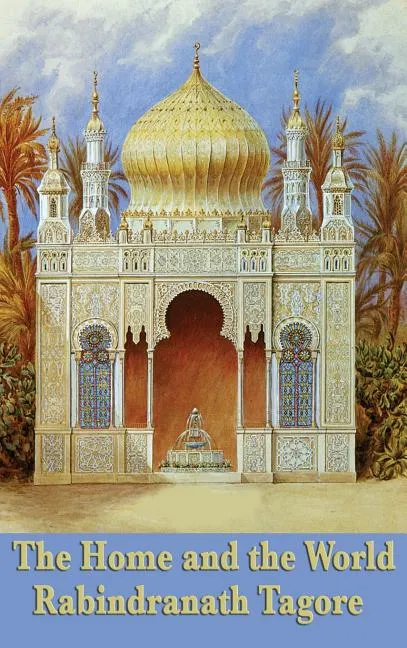
Set on a Bengali noble's estate in 1908, this is both a love story and a novel of political awakening. The central character, Bimala, is torn between the duties owed to her husband, Nikhil, and the demands made on her by the radical leader, Sandip. Her attempts to resolve the irreconciliable pressures of the home and world reflect the conflict in India itself, and the tragic outcome foreshadows the unrest that accompanied Partition in 1947.
Rabindranath Tagore
Rabindranath Tagore (1861–1941) was a Nobel Laureate in literature. (1913). He wrote successfully in all literary genres, but was, first and foremost, a poet, publishing more than fifty volumes of poetry. He wrote novels, plays, musical dramas, dance dramas, essays, travel
diaries and two autobiographies. He also left numerous drawings and paintings, and songs for which he wrote the music himself. He was the composer of the national anthem of independent India and Bangladesh. He was born in Calcutta, travelled around the world, and was knighted
in 1915. He gave up his knighthood after the Jallianwala Bagh massacre in 1919.
Among his many works are Manasi (1890), Sonar Tari (1894), Gitanjali (1910), Gitimalya (1914), Balaka (1916), The Gardener (1913), Fruit-Gathering (1916), The Fugitive (1921), Raja (1910), Dakghar (1912), Achalayatan (1912), Muktadhara (1922), Raktakaravi (1926), Gora (1910), Ghare-Baire (1916) and Yogayog (1929).
More by Rabindranath Tagore


Why Readwise Books?
Readwise Books is an ebook & audiobook platform that automatically logs how much you and your friends read, making it fun and easy to read more. Learn more →