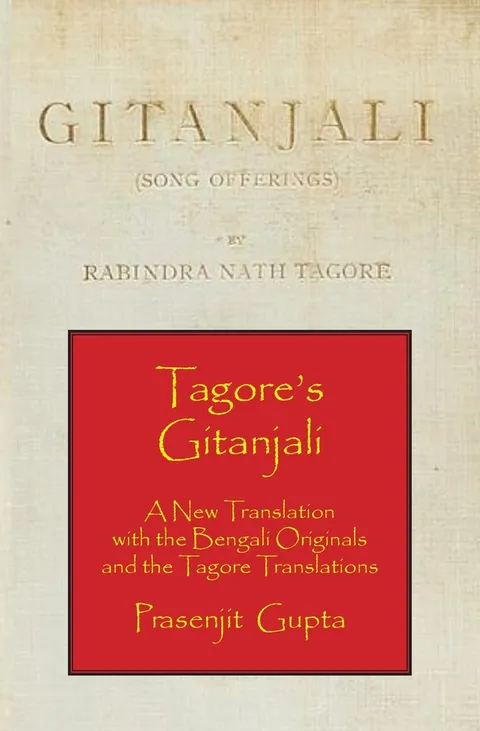
Tagore's Gitanjali
A New Translation with the Bengali Originals and the Tagore Translations
Report an issue
Tell us what's wrong and we'll take a look.
Thanks – we got it. We'll review and follow up if needed.
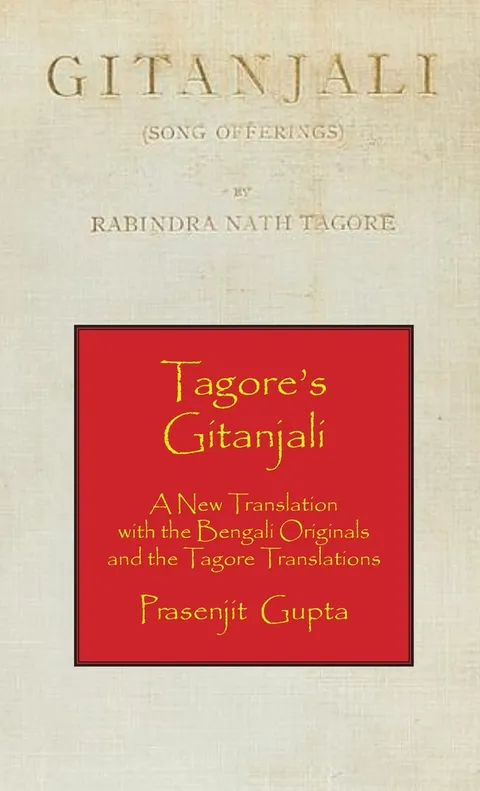
In 1912, Rabindranath Tagore's own English translations of his devotional Bengali songs - published as Gitanjali, or "Song Offerings" - introduced him to the West, won the admiration of W. B. Yeats and Ezra Pound, and led, within a year, to the Nobel Prize in Literature. More than a century later, translator Prasenjit Gupta returns to all 103 of those songs and asks a deceptively simple question: what happens to Tagore's work when a translator stays as close to the original words as English allows, rather than reshaping them, as Tagore himself often did, into the smoother, more conventionally "poetic" English his Edwardian audience expected?
This edition prints all three versions side by side for every poem - the Bengali original, Tagore's own celebrated translation, and Gupta's new, more literal rendering - so readers can trace, line by line, exactly where the two translations diverge and why. In a candid, often self-deprecating preface, Gupta walks through specific examples of Tagore's choices: the lines he compressed, the images he expanded, the stanzas he silently dropped. A closing afterword takes up a harder question still - what it means, politically and historically, for a translation to carry a once-colonized language into the language of the colonizer, and whether it matters who is doing the carrying.
The result is at once a devotional classic, a study in the art of translation, and a quiet act of homage from one Bengali writer to another. Gupta - whose earlier translations include the stories of Nirmal Verma - brings the same patient, word-by-word fidelity here that distinguished that earlier work, in service of poems that have lost none of their strangeness, tenderness, or reach toward the divine.
For readers of Tagore, for students and teachers of translation, and for anyone who has wondered how much of a poem survives its journey into another language.
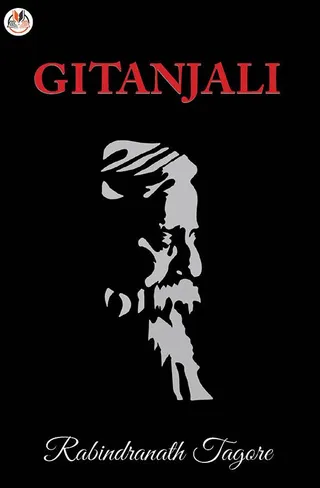
Rabindranath Tagore
Rabindranath Tagore (1861–1941) was a Nobel Laureate in literature. (1913). He wrote successfully in all literary genres, but was, first and foremost, a poet, publishing more than fifty volumes of poetry. He wrote novels, plays, musical dramas, dance dramas, essays, travel
diaries and two autobiographies. He also left numerous drawings and paintings, and songs for which he wrote the music himself. He was the composer of the national anthem of independent India and Bangladesh. He was born in Calcutta, travelled around the world, and was knighted
in 1915. He gave up his knighthood after the Jallianwala Bagh massacre in 1919.
Among his many works are Manasi (1890), Sonar Tari (1894), Gitanjali (1910), Gitimalya (1914), Balaka (1916), The Gardener (1913), Fruit-Gathering (1916), The Fugitive (1921), Raja (1910), Dakghar (1912), Achalayatan (1912), Muktadhara (1922), Raktakaravi (1926), Gora (1910), Ghare-Baire (1916) and Yogayog (1929).
More by Rabindranath Tagore
Prasenjit Gupta
Translated by
Prasenjit Gupta translates poetry and fiction from Bengali and Hindi into English. He has previously translated the works of Ashapurna Debi and Nirmal Verma.


Why Readwise Books?
Readwise Books is an ebook & audiobook platform that automatically logs how much you and your friends read, making it fun and easy to read more. Learn more →