Report an issue
Tell us what's wrong and we'll take a look.
Thanks – we got it. We'll review and follow up if needed.
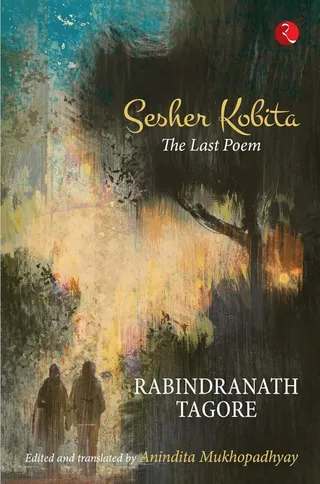
Written by the most famous Bengali poet, philosopher, social reformer, and dramatist who came into international prominence when he was awarded the Nobel Prize for literature in 1913. For the Bengali public, Tagore has been, and remains, an altogether exceptional literary figure, towering over all others. His poems, songs, novels, short stories, critical essays, and other writings have vastly enriched the cultural environment in which hundreds of millions of people live in the Bengali-speaking world, whether in Bangladesh or in India. - Amartya Sen, Harvard University and Nobel Prize in Economics in 1998 Formerly issued in a limited edition by the India Society in 1912. This edition was first published by Macmillan & Co. in March 1913. This text was retrieved from the digitized version of Gitanjali available in the internet archive of the University of Toronto. The hard copy of this version was presented to the Library of the University of Toronto by Lord Falconer from the books of the late Sir Robert Falconer, President of the University of Toronto, 1907-1932. A COLLECTION OF PROSE TRANSLATIONS MADE BY THE AUTHOR FROM THE ORIGINAL BENGALI
Rabindranath Tagore
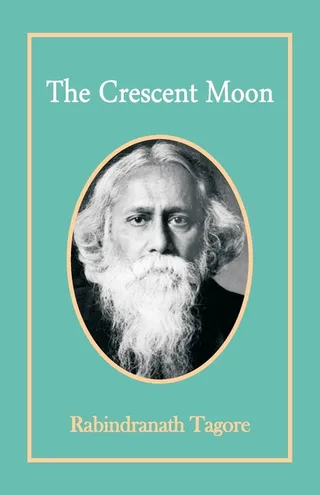
Rabindranath Tagore (1861-1941) was the youngest son of Debendranath Tagore, a leader of the Brahmo Samaj. He was educated at home and although at seventeen he was sent to England for formal schooling, he did not finish his studies there. In his mature years, in addition to his many-sided literary activities, he managed the family estates, a project which brought him into close touch with common humanity and increased his interest in social reforms. He also started an experimental school at Shantiniketan where he tried his Upanishadic ideals of education. From time to time he participated in the Indian nationalist movement, though in his own non-sentimental and visionary way; and Gandhi, the political father of modern India, was his devoted friend. Tagore was knighted by the ruling British Government in 1915, but within a few years he resigned the honour as a protest against British policies in India. Tagore had early success as a writer in his native Bengal. With his translations of some of his poems he became rapidly known in the West. In fact, his fame attained a luminous height, taking him across continents on lecture tours and tours of friendship. For the world he became the voice of India's spiritual heritage; and for India, especially for Bengal, he became a great living institution. Although, Tagore wrote successfully in all literary genres, he was first of all a poet. Among his fifty and odd volumes of poetry are Manasi (1890), Sonar Tari (1894), Gitanjali (1910), Gitimalya (1914), and Balaka (1916) . The English renderings of his poetry, which include The Gardener (1913), Fruit-Gathering (1916), and The Fugitive (1921), do not generally correspond to particular volumes in the original Bengali; and in spite of its title, Gitanjali: Song Offerings (1912), the most acclaimed of them, contains poems from other works besides its namesake. Tagore's major plays are Raja (1910), Dakghar (1912), Achalayatan (1912), Muktadhara (1922), and Raktakaravi (1926) . He is the author of several volumes of short stories and a number of novels, among them Gora (1910), Ghare-Baire (1916), and Yogayog (1929).
More by Rabindranath Tagore



Why Readwise Books?
Readwise Books is an ebook & audiobook platform that automatically logs how much you and your friends read, making it fun and easy to read more. Learn more →