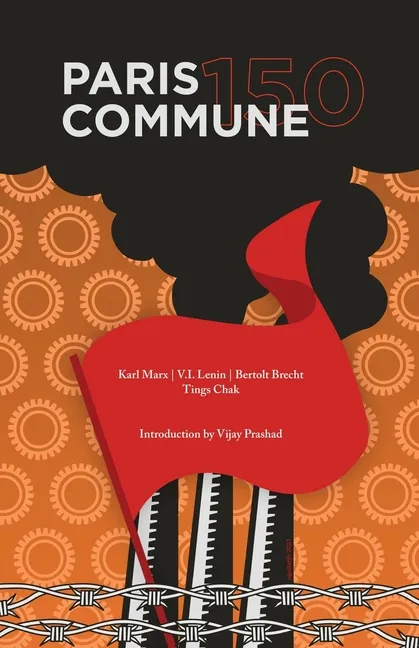
Paris Commune 150
Report an issue
Tell us what's wrong and we'll take a look.
Thanks – we got it. We'll review and follow up if needed.
On 18 March 1871, the people of Paris opened the door to utopia. Over 72 days, the workers built new institutions and advanced the practice of democracy. The forces of counterrevolution regrouped, marched on the city, and defeated the Commune on 28 May. Two days later, Karl Marx delivered an address to the International Workingmen's Association, a text later published as The Civil War in France. Almost fifty years later, as the Soviet Republic was being formed, Lenin reflected on Marx's text to consider how to smash the inherited state institutions and to build socialist institutional forms. The Commune was reborn in a higher form as the Soviet. This book collects Marx's address, Lenin's chapter in State and Revolution on the Commune, Bertolt Brecht's poem on the communards, and Manifesto of the Paris Commune's Federation of Artists.
Karl Marx
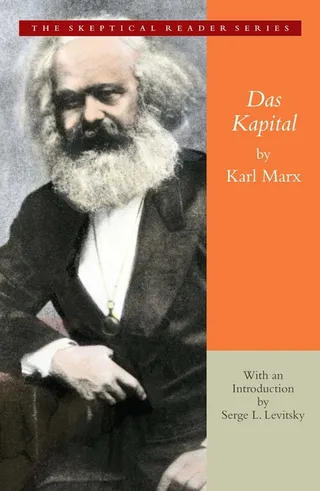
Karl Marx, a German philosopher, economist and political theorist, was born in Trier, Germany in 1818. His works, including The Communist Manifesto (co-authored with Friedrich Engels) and Das Kapital, laid the foundations for the modern communist movement.
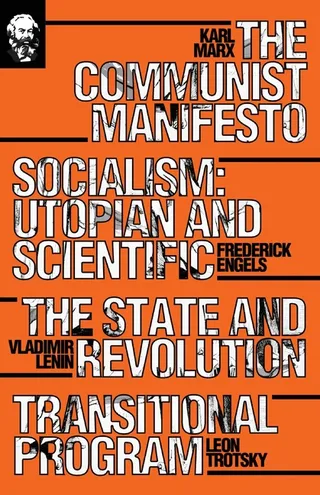
More by Karl Marx

V. I. Lenin
Vladimir Ilyich Ulyanov, better known by the alias Lenin (1870-1924), was a Russian communist revolutionary, politician, and political theorist. He played a leading role in the Bolshevik revolution of October 1917.
More by V. I. Lenin
Bertolt Brecht
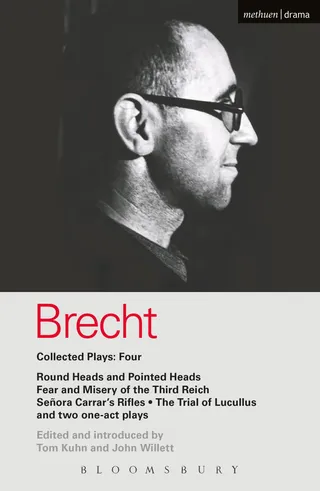
Bertolt Brecht (1898-1956) was a German poet, playwright, and theater director. An influential theater practitioner of the 20th century, Brecht made equally significant contributions to dramaturgy and theatrical production, the latter particularly through the seismic impact of the tours undertaken by the Berliner Ensemble-the post-war theater company operated by Brecht and his wife and long-time collaborator, the actress Helene Weigel-with its internationally acclaimed productions.
More by Bertolt Brecht






Why Readwise Books?
Readwise Books is an ebook & audiobook platform that automatically logs how much you and your friends read, making it fun and easy to read more. Learn more →