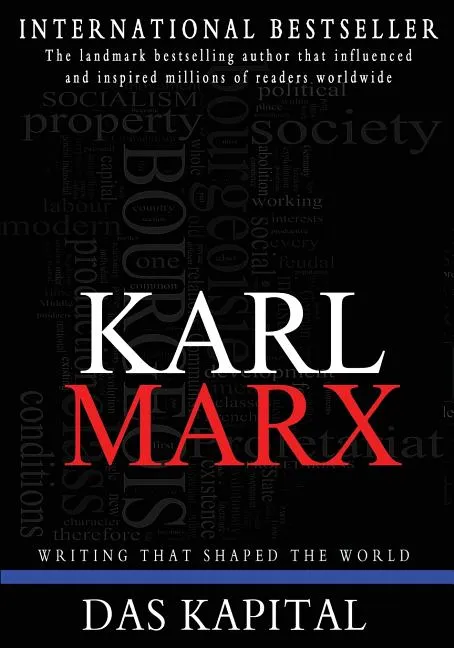
Das Kapital
Report an issue
Tell us what's wrong and we'll take a look.
Thanks – we got it. We'll review and follow up if needed.

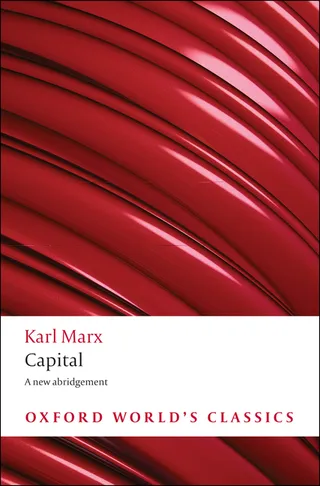
One of the most notorious works of modern times, as well as one of the most influential, "Capital" is an incisive critique of private property and the social relations it generates. Living in exile in England, where this work was largely written, Marx drew on a wide-ranging knowledge of its society to support his analysis and generate fresh insights. Arguing that capitalism would create an ever-increasing division in wealth and welfare, he predicted its abolition and replacement by a system with common ownership of the means of production. "Capital" rapidly acquired readership among the leaders of social democratic parties, particularly in Russia and Germany, and ultimately throughout the world, to become a work described by Marx's friend and collaborator Friedrich Engels as 'the Bible of the Working Class'.
Karl Marx
Karl Marx was born in 1818, in the Rhenish city of Trier, the son of a successful lawyer. He studied law and philosophy at the universities of Bonn and Berlin, completing his doctorate in 1841. In Paris three years later, Marx was introduced to the study of political economy by a former fellow student, Frederick Engels. In 1848 they collaborated in writing The Communist Manifesto. Expelled from Prussia in the same year, Marx took up residence first in Paris and then in London where, in 1867 he published his magnum opus Capital. A co-founder of the International Workingmen's Association in 1864, Marx died in London in 1883.
More by Karl Marx




Why Readwise Books?
Readwise Books is an ebook & audiobook platform that automatically logs how much you and your friends read, making it fun and easy to read more. Learn more →