
Galileo
Report an issue
Tell us what's wrong and we'll take a look.
Thanks – we got it. We'll review and follow up if needed.
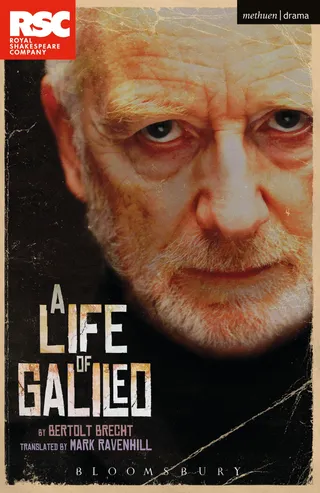
Considered by many to be one of Brecht's masterpieces, Galileo explores the question of a scientist's social and ethical responsibility, as the brilliant Galileo must choose between his life and his life's work when confronted with the demands of the Inquisition. Through the dramatic characterization of the famous physicist, Brecht examines the issues of scientific morality and the difficult relationship between the intellectual and authority. This version of the play is the famous one that was brought to completion by Brecht himself, working with Charles Laughton, who played Galileo in the first two American productions (Hollywood and New York, 1947). Since then the play has become a classic in the world repertoire. "The play which most strongly stamped on my mind a sense of Brecht's great stature as an artist of the modern theatre was Galileo." - Harold Clurman; "Thoughtful and profoundly sensitive." - Newsweek.
Bertolt Brecht
Bertolt Brecht (1898-1956) was a German poet, playwright, and theater director. An influential theater practitioner of the 20th century, Brecht made equally significant contributions to dramaturgy and theatrical production, the latter particularly through the seismic impact of the tours undertaken by the Berliner Ensemble-the post-war theater company operated by Brecht and his wife and long-time collaborator, the actress Helene Weigel-with its internationally acclaimed productions.
More by Bertolt Brecht












Why Readwise Books?
Readwise Books is an ebook & audiobook platform that automatically logs how much you and your friends read, making it fun and easy to read more. Learn more →