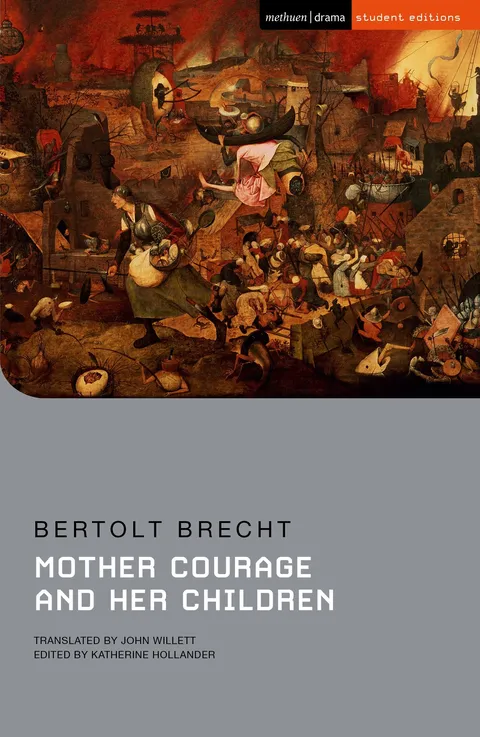
Mother Courage and Her Children
Report an issue
Tell us what's wrong and we'll take a look.
Thanks – we got it. We'll review and follow up if needed.
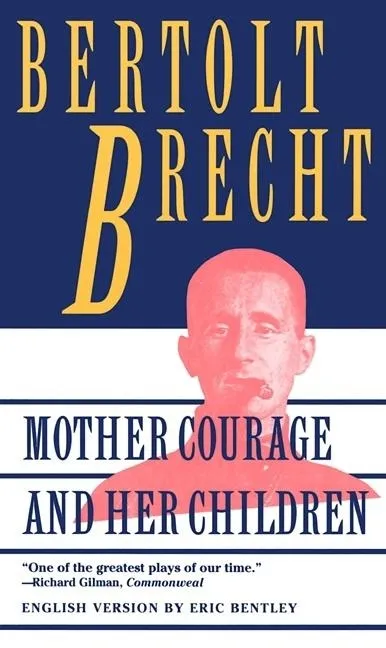
This new Student Edition, featuring the classic John Willett translation of the play, includes an introduction by Katherine Hollander, which explores the following:
* Contexts (Thirty Years War, 1618-1648; World War II and exile; sources; influential figures such as Brecht, Margarete Steffin, Helene Weigel and Karin Michaelis)
* Themes (war; nature; capitalism)
* Dramatic devices (epic theatre)
* Production history and critical reception
* Academic debate (Marxist, feminist and postmodernist)
* Further study
Widely regarded as Brecht's best work, Mother Courage and her Children was written in 1938-9 and received its premiere in Zurich in 1941. Mother Courage - a canteen woman serving with the Swedish Army during the Thirty Years War (1618-48) - follows the armies, selling provisions and liquor to the troops. Both her sons die in the war and her dumb daughter, Kattrin, is mortally wounded as she beats a drum to warn the town of Halle of an impending attack. Yet, all the while, Mother Courage continues her travels with her wagon, indomitably businesslike, calculating how she can make material profit from the war and turn conflict into capital.
Bertolt Brecht
Bertolt Brecht (1898-1956) was a German poet, playwright, and theater director. An influential theater practitioner of the 20th century, Brecht made equally significant contributions to dramaturgy and theatrical production, the latter particularly through the seismic impact of the tours undertaken by the Berliner Ensemble-the post-war theater company operated by Brecht and his wife and long-time collaborator, the actress Helene Weigel-with its internationally acclaimed productions.
More by Bertolt Brecht






Why Readwise Books?
Readwise Books is an ebook & audiobook platform that automatically logs how much you and your friends read, making it fun and easy to read more. Learn more →