Kenneth Burke on Shakespeare
Report an issue
Tell us what's wrong and we'll take a look.
Thanks – we got it. We'll review and follow up if needed.
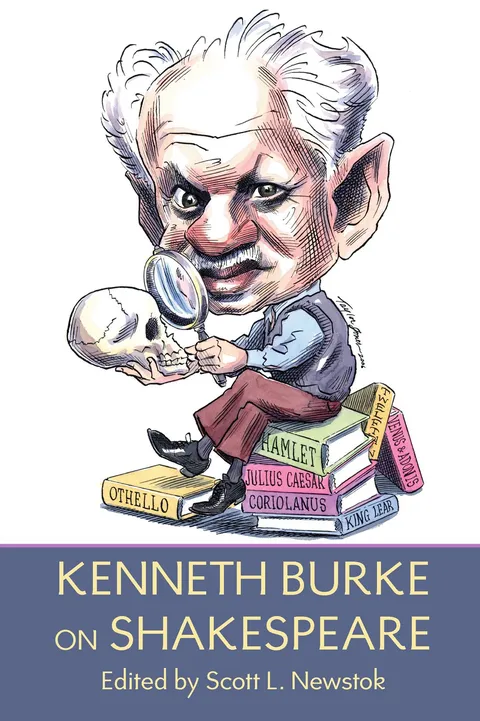
This volume gathers and annotates all of the Shakespeare criticism, including previously unpublished notes and lectures, by the maverick American intellectual Kenneth Burke (1897–1993). Burke’s interpretations of Shakespeare have had an impressive influence on important lines of contemporary scholarship; playwrights and directors have been stirred by his dramaturgical investigations; and many readers outside academia have enjoyed his ingenious dissections of what makes a play function. Burke’s intellectual project continually engaged with Shakespeare’s works, and Burke’s writings on Shakespeare, in turn, have had an immense impact on generations of readers. Carefully edited and annotated, with helpful cross-references, Burke’s fascinating interpretations of Shakespeare remain challenging, provocative, and accessible. Read together, these pieces form an evolving argument about the nature of Shakespeare’s plays and poems. Included are thirteen analyses of individual plays and poems, an introductory lecture explaining his approach to reading Shakespeare, and a substantial appendix of hundreds of Burke’s other references to Shakespeare. Scott L. Newstok also provides a historical introduction and an account of Burke’s legacy. Burke’s enduring familiarity with Shakespeare likely helped shape his own theory of dramatism, an ambitious elaboration of the teatrum mundi conceit. Burke is renowned for his landmark 1951 essay on Othello, which wrestles with concerns still relevant to scholars more than a half century later; his ingenious ventriloquism of Mark Antony’s address over Caesar’s body has likewise found a number of appreciative readers, as have (albeit less frequently) his many other essays on the playwright. Burke’s first and final pieces of literary criticism both examine Shakespearean plays, thereby bookending an impressive, career-long contribution to the field of Shakespeare studies. Among the many major Shakespearean critics who have gratefully acknowledged Burke’s influence are Paul Alpers, Harold Bloom, Stanley Cavell, René Girard, Stephen Greenblatt, and Patricia Parker.
Kenneth Burke
Kenneth Burke was a self-taught thinker who attempted to integrate scientific and philosophical concepts with his analysis of semantics and literature. Between 1927 and 1929, Burke worked for the "Dial "as a music critic. After a brief stint with "The Nation "(1934-36), he turned to literary criticism and taught at Bennington College from 1943 to 1961. His many works have all been published by the University of California Press.
More by Kenneth Burke









Why Readwise Books?
Readwise Books is an ebook & audiobook platform that automatically logs how much you and your friends read, making it fun and easy to read more. Learn more →