Report an issue
Tell us what's wrong and we'll take a look.
Thanks – we got it. We'll review and follow up if needed.
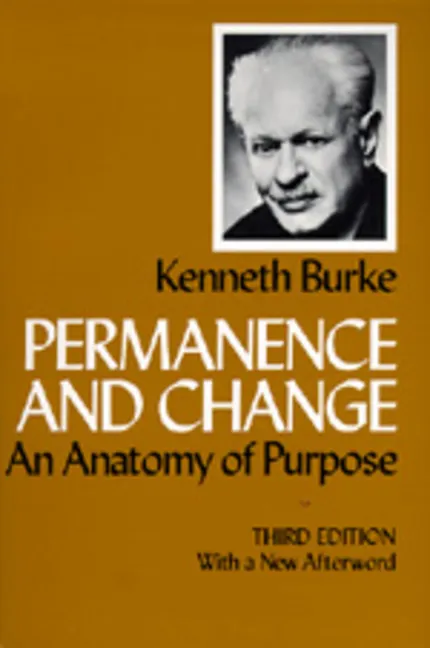
Permanence and Change was written and first published in the depths of the Great Depression. Attitudes Toward History followed it two years later. These were revolutionary texts in the theory of communication, and, as classics, they retain their surcharge of energy. Permanence and Change treats human communication in terms of ideal cooperation, whereas Attitudes Towards History characterizes tactics and patterns of conflict typical of actual human associations. It is in Permanence and Change that Burke establishes in path-breaking fashion that form permeates society just as it does poetry and the arts. Hence, his master idea that forms of art are not exclusively aesthetic: the cycles of a storm, the gradations of a sunrise, the stages of an epidemic, the undoing of Prince Hamlet are all instances of progressive form. This new edition of Permanence and Change reprints Hugh Dalziel Duncan's long sociological introduction and includes a substantial new afterward in which Burke reexamines his early ideas in light of subsequent developments in his own thinking and in social theory.
Kenneth Burke
Kenneth Burke was a self-taught thinker who attempted to integrate scientific and philosophical concepts with his analysis of semantics and literature. Between 1927 and 1929, Burke worked for the "Dial "as a music critic. After a brief stint with "The Nation "(1934-36), he turned to literary criticism and taught at Bennington College from 1943 to 1961. His many works have all been published by the University of California Press.
More by Kenneth Burke








Why Readwise Books?
Readwise Books is an ebook & audiobook platform that automatically logs how much you and your friends read, making it fun and easy to read more. Learn more →