
The Philosophy of Literary Form
Report an issue
Tell us what's wrong and we'll take a look.
Thanks – we got it. We'll review and follow up if needed.
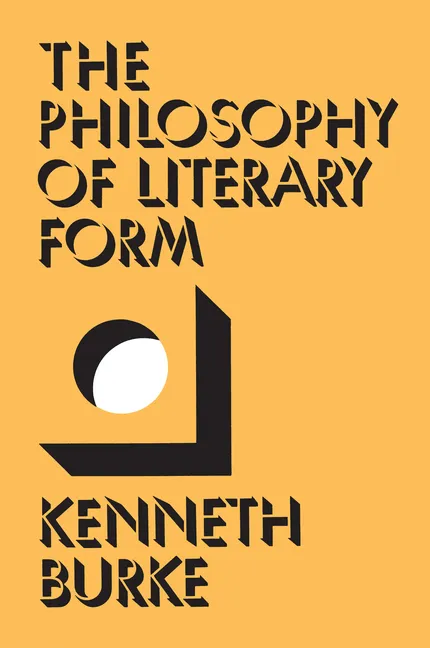
From the Foreword These pieces are selections from work done in the Thirties, a decade so changeable that I at first thought of assembling them under the title, "While Everything Flows." Their primary interest is in speculation on the nature of linguistic, or symbolic, or literary action--and in a search for more precise ways of locating or defining such action. Words are aspects of a much wider communicative context, most of which is not verbal at all. Yet words also have a nature peculiarly their own. And when discussing them as modes of action, we must consider both this nature as words in themselves and the nature they get from the non-verbal scenes that support their acts. I shall be happy if the reader can say of this book that, while always considering words as acts upon a scene, it avoids the excess of environmentalist schools which are usually so eager to trace the relationships between act and scene that they neglect to trace the structure of the act itself.
From the Foreword These pieces are selections from work done in the Thirties, a decade so changeable that I at first thought of assembling them under the title, "While Everything Flows." Their primary interest is in speculation on the nature of linguis
Kenneth Burke
Kenneth Burke was a self-taught thinker who attempted to integrate scientific and philosophical concepts with his analysis of semantics and literature. Between 1927 and 1929, Burke worked for the "Dial "as a music critic. After a brief stint with "The Nation "(1934-36), he turned to literary criticism and taught at Bennington College from 1943 to 1961. His many works have all been published by the University of California Press.
More by Kenneth Burke








Why Readwise Books?
Readwise Books is an ebook & audiobook platform that automatically logs how much you and your friends read, making it fun and easy to read more. Learn more →