Thought Relics
Report an issue
Tell us what's wrong and we'll take a look.
Thanks – we got it. We'll review and follow up if needed.
It is given to us to reveal our soul, that which is One in us, which is eternal. This can only be done by its passage through the fleeting Many; to assert the infinity of the spirit by continual sacrifice of forms. The self being the vessel that gathers and holds gives us the opportunity of giving up. If we believe only in self then we anxiously cling to our stores which causes us misery and failure. When we believe in soul the very inconstancy of life finds its eternal meaning and we feel that we can afford to lose
Rabindranath Tagore
Rabindranath Tagore (1861–1941) was a Nobel Laureate in literature. (1913). He wrote successfully in all literary genres, but was, first and foremost, a poet, publishing more than fifty volumes of poetry. He wrote novels, plays, musical dramas, dance dramas, essays, travel
diaries and two autobiographies. He also left numerous drawings and paintings, and songs for which he wrote the music himself. He was the composer of the national anthem of independent India and Bangladesh. He was born in Calcutta, travelled around the world, and was knighted
in 1915. He gave up his knighthood after the Jallianwala Bagh massacre in 1919.
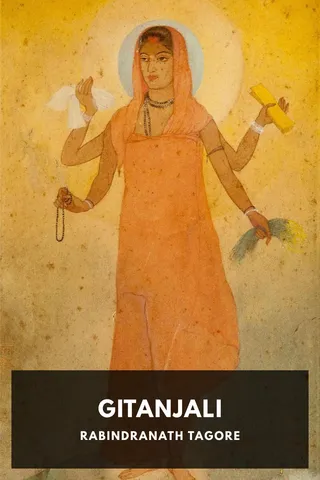
Among his many works are Manasi (1890), Sonar Tari (1894), Gitanjali (1910), Gitimalya (1914), Balaka (1916), The Gardener (1913), Fruit-Gathering (1916), The Fugitive (1921), Raja (1910), Dakghar (1912), Achalayatan (1912), Muktadhara (1922), Raktakaravi (1926), Gora (1910), Ghare-Baire (1916) and Yogayog (1929).
More by Rabindranath Tagore



Why Readwise Books?
Readwise Books is an ebook & audiobook platform that automatically logs how much you and your friends read, making it fun and easy to read more. Learn more →