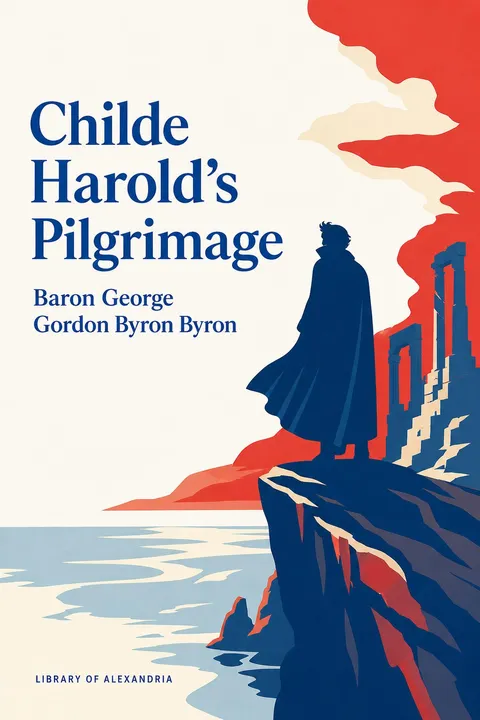
Childe Harold's Pilgrimage
Romantic Poetry of European Travel, Exile, and the Restless Heart
Report an issue
Tell us what's wrong and we'll take a look.
Thanks – we got it. We'll review and follow up if needed.

What can travel change when disillusionment travels with you? Across Europe's mountains, ruins, and battlefields, a restless wanderer searches for something beyond the pleasures he has left behind.
Lord Byron's Childe Harold's Pilgrimage is a major work of English Romantic poetry, joining a traveller's outward journey to an inward exploration of loneliness, memory, and desire. Weary of fashionable society, Harold leaves his homeland for the landscapes of Portugal, Spain, Albania, and Greece. As the poem unfolds, its horizons widen to the Alps and Italy, and the traveller's story gives way increasingly to the poet's own searching reflections.
Written in Spenserian stanzas, the poem brings personal feeling into conversation with European history. Ancient glory, political conflict, and the passing of empires stand beside the enduring force of mountains, lakes, and the sea. Harold helped establish the Byronic hero: proud, alienated, and dissatisfied with the world around him. Yet the poem offers more than melancholy; its attention to natural grandeur and human aspiration makes it a compelling encounter with the Romantic imagination.
What readers find inside:
- The Byronic hero - Harold's disenchantment gives a memorable shape to the figure of the solitary, questioning outsider.
- Europe in verse - Journeys through southern Europe, the Alps, and Italy connect places with personal and historical reflection.
- The sublime in nature - Vast landscapes awaken awe while testing the limits of human ambition and sorrow.
- History and its aftermath - Ruins and battlefields prompt meditations on power, glory, and the fragility of achievement.
- A searching poetic voice - Formal stanzas carry intimate reflections on exile, memory, and the longing for meaning.
This work will appeal to readers of Romantic poetry, lovers of literary travel, and anyone drawn to the tension between outward adventure and inward unrest.
Begin the journey and discover how a distant landscape can bring the restless heart into sharper focus.








Why Readwise Books?
Readwise Books is an ebook & audiobook platform that automatically logs how much you and your friends read, making it fun and easy to read more. Learn more →