Edward II
Report an issue
Tell us what's wrong and we'll take a look.
Thanks – we got it. We'll review and follow up if needed.
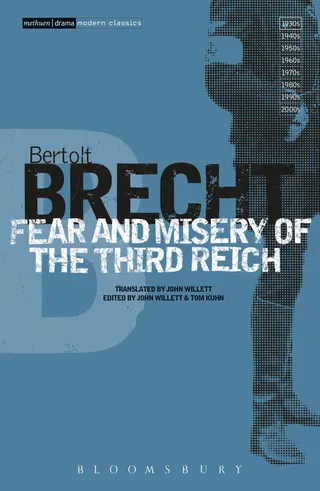
Edward II is, in a sense, Bertolt Brecht's only tragedy. Based on Christopher Marlowe's classic of the same name, it departs from its source as widely as The Threepenny Opera departs from Gay's Beggar's Opera. Brecht has made a multitude of technical changes calculated to streamline the play, with a smaller cast and simpler action, and he has created virtually new and totally compelling characters with his extravagant variations on Anne, Edward's queen, and Mortimer, the villain of the piece. Brecht also reinterprets Marlowe's famously homosexual protagonist, creating an Edward initially more crudely homoerotic and ultimately more truly heroic. Brecht's Edward is a hero for the modern era: an existential hero defying a meaningless universe with his courage.
Bertolt Brecht
Bertolt Brecht (1898-1956) was a German poet, playwright, and theater director. An influential theater practitioner of the 20th century, Brecht made equally significant contributions to dramaturgy and theatrical production, the latter particularly through the seismic impact of the tours undertaken by the Berliner Ensemble-the post-war theater company operated by Brecht and his wife and long-time collaborator, the actress Helene Weigel-with its internationally acclaimed productions.
More by Bertolt Brecht

















Why Readwise Books?
Readwise Books is an ebook & audiobook platform that automatically logs how much you and your friends read, making it fun and easy to read more. Learn more →