The Origin And Development Of The Quantum Theory (1922)
Report an issue
Tell us what's wrong and we'll take a look.
Thanks – we got it. We'll review and follow up if needed.
""The Origin and Development of the Quantum Theory"" is a classic work of physics written by Max Planck in 1922. The book explores the history and evolution of the quantum theory, which revolutionized our understanding of the behavior of matter and energy at the atomic and subatomic level. Planck provides a detailed account of the development of the theory, from its origins in the work of Planck himself, to the contributions of other pioneering physicists such as Einstein, Bohr, and Heisenberg. The book also delves into the philosophical implications of the quantum theory, including its impact on our understanding of causality and determinism. Written in clear and accessible language, ""The Origin and Development of the Quantum Theory"" is a must-read for anyone interested in the history and philosophy of science, as well as for physicists seeking a deeper understanding of the foundations of their field.This scarce antiquarian book is a facsimile reprint of the old original and may contain some imperfections such as library marks and notations. Because we believe this work is culturally important, we have made it available as part of our commitment for protecting, preserving, and promoting the world's literature in affordable, high quality, modern editions, that are true to their original work.
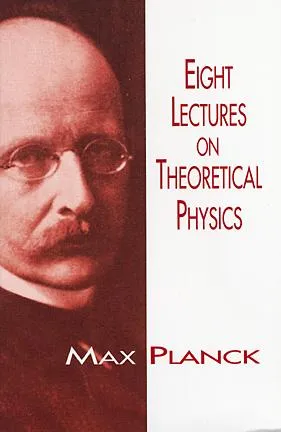
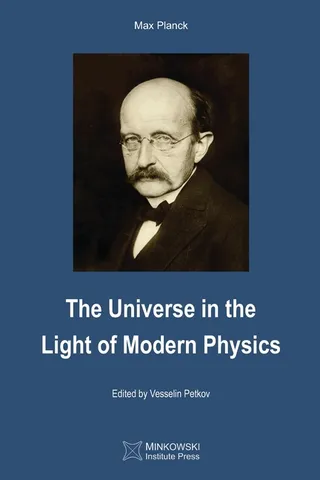
Max Planck
Max (Karl Ernst Ludwig) Planck was a German physicist and philosopher known for his quantum theory, for which he won the Nobel Prize in Physics in 1918. Planck was born in Kiel, Germany, in 1858 to an academic family, and valued education from a young age. He attended the Universities of Munich and Berlin to study physics under the great scientific leaders Kirchhoff and Helmholtz. His early work focused on the study of thermodynamics, and in 1900 he published a paper on his quantum theory that would change the face of modern physics. Planck worked as a professor at Berlin University his entire career, and served as the president of the Kaiser Wilhelm Society for the Promotion of Science. During World War II, Planck experienced great hardships while he remained in Germany but openly opposed the Nazi regime. One of his two sons was executed during this time for an unsuccessful attempt on Hitler’s life, and Planck’s home in Berlin was eventually bombed. He continued to write about physics and philosophy until his death in 1947.
More by Max Planck





Why Readwise Books?
Readwise Books is an ebook & audiobook platform that automatically logs how much you and your friends read, making it fun and easy to read more. Learn more →