One Man's Initiation-1917
Report an issue
Tell us what's wrong and we'll take a look.
Thanks – we got it. We'll review and follow up if needed.
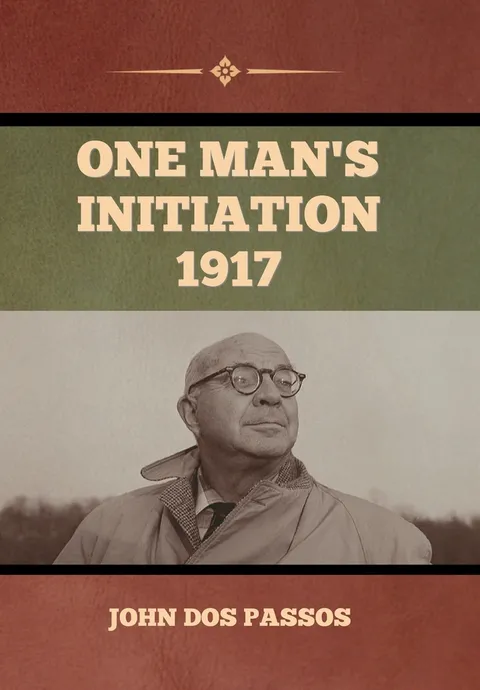
"One Man's Initiation, 1917" by John Dos Passos offers a powerful glimpse into the realities of World War I. A notable work of American literature, this war story provides a compelling narrative reflecting the experiences of individuals caught in the conflict. Dos Passos, a celebrated author, captures the atmosphere of the era, exploring themes relevant to both historical and biographical contexts.
This meticulously prepared edition presents a timeless account of war, suitable for anyone interested in military history and the human cost of conflict. A valuable addition to the genre of war stories, it sheds light on a pivotal period in history. Readers interested in World War One and its impact will find this book to be a poignant and insightful read.
This work has been selected by scholars as being culturally important, and is part of the knowledge base of civilization as we know it.
This work is in the public domain in the United States of America, and possibly other nations. Within the United States, you may freely copy and distribute this work, as no entity (individual or corporate) has a copyright on the body of the work.
Scholars believe, and we concur, that this work is important enough to be preserved, reproduced, and made generally available to the public. We appreciate your support of the preservation process, and thank you for being an important part of keeping this knowledge alive and relevant.
John Dos Passos
John Roderigo Dos Passos (b.1896, d.1970) was a writer, painter, and political activist. He wrote over forty books, including plays, poetry, novels, biographies, histories, and memoirs. He crafted over four hundred drawings, watercolors, and other artworks.
Dos Passos considered himself foremost a writer of contemporary chronicles. He chose the moniker of "chronicler" because he was happiest working at the edge of fiction and nonfiction.
Both genres benefited from his mastery of observation--his "camera eye"--and his sense of historical context. Dos Passos sought to ground fiction in historic detail and working-class, realistic dialogue. He invented a multimedia format of newsreels, songs, biographies, and autobiography to convey the frenzy of 20th century America's industrialism and urbanism. His most memorable fiction--Three Soldiers (1920), Manhattan Transfer (1925), U.S.A. (1938)--possesses the authority of history and the allure of myth. Likewise, he sought to vitalize nonfiction history and reportage with the colors, sounds, and smells documented on his journeys across the globe.
More by John Dos Passos




Why Readwise Books?
Readwise Books is an ebook & audiobook platform that automatically logs how much you and your friends read, making it fun and easy to read more. Learn more →