Where Is Science Going?
Report an issue
Tell us what's wrong and we'll take a look.
Thanks – we got it. We'll review and follow up if needed.
""Where Is Science Going?"" is a thought-provoking book by Max Planck, a renowned physicist and Nobel laureate. In this book, Planck explores the future of science and its impact on society. He argues that science is not just a collection of facts, but a way of thinking that can help us understand the world around us. Planck also discusses the limitations of science and the role of intuition and creativity in scientific discovery. He examines the relationship between science and religion, and the ethical implications of scientific progress. Throughout the book, Planck emphasizes the importance of scientific inquiry and the need for scientists to remain open-minded and curious. This book is a must-read for anyone interested in the philosophy of science and the future of scientific discovery.This scarce antiquarian book is a facsimile reprint of the old original and may contain some imperfections such as library marks and notations. Because we believe this work is culturally important, we have made it available as part of our commitment for protecting, preserving, and promoting the world's literature in affordable, high quality, modern editions, that are true to their original work.
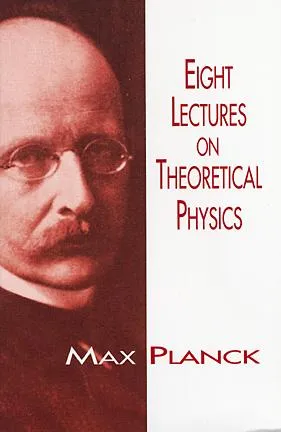
Max Planck
Max (Karl Ernst Ludwig) Planck was a German physicist and philosopher known for his quantum theory, for which he won the Nobel Prize in Physics in 1918. Planck was born in Kiel, Germany, in 1858 to an academic family, and valued education from a young age. He attended the Universities of Munich and Berlin to study physics under the great scientific leaders Kirchhoff and Helmholtz. His early work focused on the study of thermodynamics, and in 1900 he published a paper on his quantum theory that would change the face of modern physics. Planck worked as a professor at Berlin University his entire career, and served as the president of the Kaiser Wilhelm Society for the Promotion of Science. During World War II, Planck experienced great hardships while he remained in Germany but openly opposed the Nazi regime. One of his two sons was executed during this time for an unsuccessful attempt on Hitler’s life, and Planck’s home in Berlin was eventually bombed. He continued to write about physics and philosophy until his death in 1947.
More by Max Planck




Why Readwise Books?
Readwise Books is an ebook & audiobook platform that automatically logs how much you and your friends read, making it fun and easy to read more. Learn more →