Report an issue
Tell us what's wrong and we'll take a look.
Thanks – we got it. We'll review and follow up if needed.
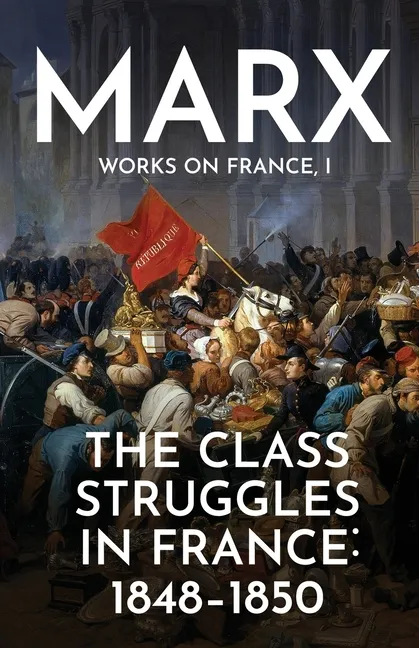
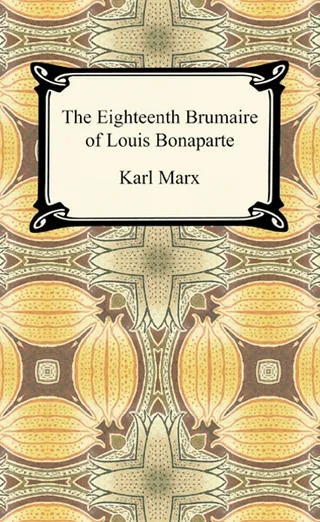
The revolutions of 1848 which broke out across the world are among the landmark events of the nineteenth century. The experiences of this tumultuous period helped to crystallise and sharpen the ideas of Marx and Engels.
Written in the midst of events, in a profound and detailed application of historical materialism, Marx reveals that the political and social changes taking place in revolutionary and counter-revolutionary France have their root in the economic changes affecting European capitalism.
Included is Engels' uncensored introduction to the 1895 edition. Here, Engels provides historical context and shows how this period relates to subsequent events in France - including the Paris Commune - as well as explaining the development of Marx and Engels' own conception of scientific socialism.
Karl Marx
Karl Marx was born in 1818, in the Rhenish city of Trier, the son of a successful lawyer. He studied law and philosophy at the universities of Bonn and Berlin, completing his doctorate in 1841. In Paris three years later, Marx was introduced to the study of political economy by a former fellow student, Frederick Engels. In 1848 they collaborated in writing The Communist Manifesto. Expelled from Prussia in the same year, Marx took up residence first in Paris and then in London where, in 1867 he published his magnum opus Capital. A co-founder of the International Workingmen's Association in 1864, Marx died in London in 1883.
More by Karl Marx




Why Readwise Books?
Readwise Books is an ebook & audiobook platform that automatically logs how much you and your friends read, making it fun and easy to read more. Learn more →