Economic and Philosophic Manuscripts of 1844 and the Manifesto of the Communist Party
Report an issue
Tell us what's wrong and we'll take a look.
Thanks – we got it. We'll review and follow up if needed.
Two foundational works of modern political thought, Economic and Philosophic Manuscripts of 1844 and The Manifesto of the Communist Party reveal Karl Marx and Frederick Engels at crucial moments in the development of socialist theory, social criticism, and revolutionary philosophy.
In Economic and Philosophic Manuscripts of 1844, Marx examines labor, private property, alienation, money, and the condition of the worker under capitalism. Written early in his career and not published during his lifetime, the manuscripts show Marx wrestling with philosophy, economics, and human freedom in a language still deeply shaped by Hegel, Feuerbach, and the moral urgency of nineteenth-century social upheaval. Here Marx develops one of his most influential ideas: that modern labor can estrange human beings from their work, from the products they create, from one another, and from their own human potential.
The Manifesto of the Communist Party, written by Marx and Engels and first published in 1848, is one of the most famous political documents ever written. Concise, forceful, and historically sweeping, it presents a theory of class struggle, the rise of the bourgeoisie, the revolutionary role of the proletariat, and the demand for a radical transformation of social and economic life. Together, these works offer readers a powerful introduction to Marxist thought, combining philosophical analysis with political urgency and remaining essential for understanding modern debates over capitalism, labor, class, ideology, and revolution.
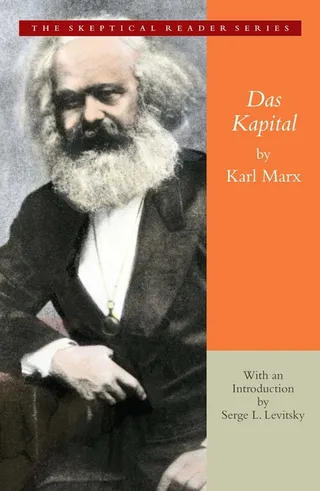
Karl Marx
Karl Marx was born in 1818, in the Rhenish city of Trier, the son of a successful lawyer. He studied law and philosophy at the universities of Bonn and Berlin, completing his doctorate in 1841. In Paris three years later, Marx was introduced to the study of political economy by a former fellow student, Frederick Engels. In 1848 they collaborated in writing The Communist Manifesto. Expelled from Prussia in the same year, Marx took up residence first in Paris and then in London where, in 1867 he published his magnum opus Capital. A co-founder of the International Workingmen's Association in 1864, Marx died in London in 1883.
More by Karl Marx

Friedrich Engels
Friedrich Engels (1820–1895) was a German philosopher and co-author of The Communist Manifesto alongside Karl Marx. Born in Barmen, Prussia, Engels played a crucial role in shaping Marxist theory. His works, including The Condition of the Working Class in England, explored class struggles and historical materialism. As a committed socialist, Engels contributed significantly to the foundations of modern communist thought, leaving a lasting impact on political philosophy and social theory.
More by Friedrich Engels



Why Readwise Books?
Readwise Books is an ebook & audiobook platform that automatically logs how much you and your friends read, making it fun and easy to read more. Learn more →