
Report an issue
Tell us what's wrong and we'll take a look.
Thanks – we got it. We'll review and follow up if needed.

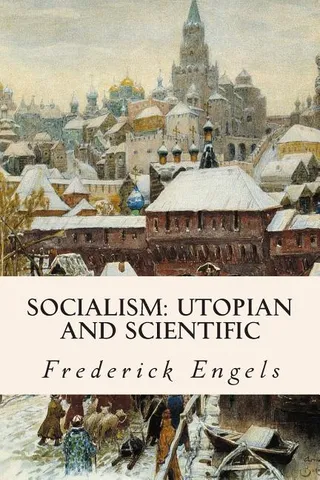
This is the book that founded a world outlook, and its author did not want to write it. Engels says so in the first sentence of the first preface: "The following work is by no means the fruit of any 'inner urge'. On the contrary."
Eugen Duehring, a lecturer at Berlin University who wrote at enormous speed on everything, had announced himself a socialist - and not merely a socialist but the author of a complete new system covering philosophy, political economy and the shape of the society to come. In a young German party his confidence won over Johann Most, the young Eduard Bernstein and others, and it "thus became necessary to take up the gauntlet thrown down to us, and to fight out the struggle whether we liked it or not".
Engels wrote for two years, from May 1876 to July 1878, against resistance: Duehring's supporters tried at the Gotha congress of 1877 to stop the party paper printing it. Marx was closely involved - "I read the whole manuscript to him before it was printed", Engels records, and the tenth chapter of the economics part was written by Marx himself. What came out of this reluctant, obstructed, jointly supervised polemic was the first connected statement of the whole Marxist position that either founder ever made, and the source of the three chapters Engels later lifted out as Socialism: Utopian and Scientific.
Its permanent target was never Duehring, who is forgotten, but the type he belongs to: the confident, complete system that has an answer for everything and treats revision as heresy. It remains the best short inoculation against that type. Its account of morality as historical without being arbitrary is still the most useful thing a socialist can say when told that some arrangement is simply human nature; its description of the anarchy of production - increasing organisation inside each firm and none at all between them - remains the sharpest statement of why a system that plans brilliantly in detail lurches blindly in the aggregate.
Translated by Emile Burns. New critical introduction by Dmitry Chasovennikov.
Friedrich Engels
Friedrich Engels (1820–1895) was a German philosopher and co-author of The Communist Manifesto alongside Karl Marx. Born in Barmen, Prussia, Engels played a crucial role in shaping Marxist theory. His works, including The Condition of the Working Class in England, explored class struggles and historical materialism. As a committed socialist, Engels contributed significantly to the foundations of modern communist thought, leaving a lasting impact on political philosophy and social theory.
More by Friedrich Engels



Why Readwise Books?
Readwise Books is an ebook & audiobook platform that automatically logs how much you and your friends read, making it fun and easy to read more. Learn more →