Report an issue
Tell us what's wrong and we'll take a look.
Thanks – we got it. We'll review and follow up if needed.
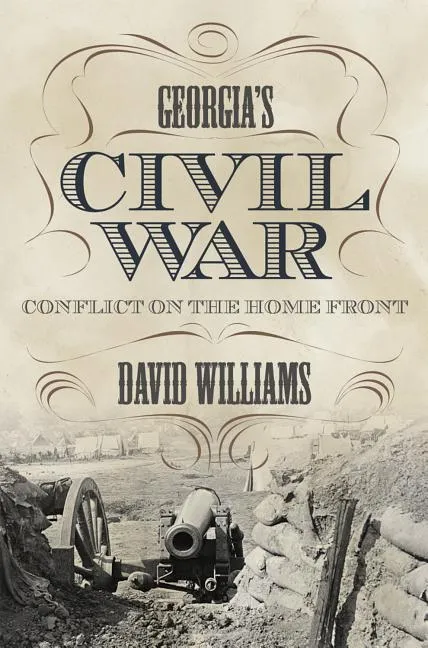
"In September 1864, at a gathering in Macon, Georgia, Confederate President Jefferson Davis admitted that two-thirds of his troops were absent, most without leave. Some had opposed secession to begin with. Others came to see the conflict as a "rich man's war." But it was hardship and hunger among their families that drew most soldiers back home. For more than a century and a half, historians have often ignored the Confederacy's home front difficulties, which had so much to do with desertion and defeat. Anyone with even a passing knowledge of the Civil War knows that Confederate armies were outnumbered two to one. In a presumptive way, the manpower disparity is usually attributed to the North's larger population. Lost in that simplistic view is the impact that desertion had on sapping the Confederacy's fighting strength. And this is but one of the many critical issues historians too often brush aside. Why were Southerners divided on secession? How were the foundations for those divisions laid in the Antebellum South? Why did Confederate leaders impose a draft? Why did so many Southerners call the conflict a rich man's war? What impact did resistance by enslaved people have on the war effort? What was the impact of women's attitudes and actions? Why was the Confederacy unable to feed itself adequately? And, finally, what impact did all this have on the war's course and outcome? Only by looking behind the battle lines, as Georgia's Civil War does, can we find answers to these frequently overlooked questions."--
David Williams
David Williams was a writer best known for his crime-novel series featuring the banker Mark Treasure and police inspector DI Parry.
After serving as Naval Officer in the Second World War, Williams completed a History degree at St Johns College, Oxford before embarking on a career in advertising. He became a full-time fiction writer in 1978. Williams wrote twenty-three novels, seventeen of which were part of the Mark Treasure series of whodunnits which began with Unholy Writ (1976). His experience in both the Anglican Church and the advertising world informed and inspired his work throughout his career.
Two of Williams' books were shortlisted for the Crime Writers' Association Gold Dagger Award, and in 1988 he was elected to the Detection Club.
More by David Williams






Why Readwise Books?
Readwise Books is an ebook & audiobook platform that automatically logs how much you and your friends read, making it fun and easy to read more. Learn more →