Report an issue
Tell us what's wrong and we'll take a look.
Thanks – we got it. We'll review and follow up if needed.
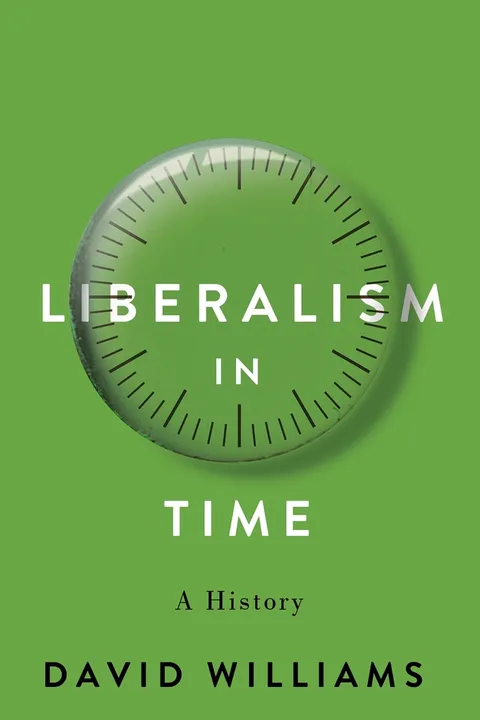
We are living through a crisis that casts doubt on the idea of progress, the defining trope of liberalism. The idea of progress as the achievement of liberalism developed over time, in relation to changing ideas about time. Understanding skepticism about progress requires us to ask questions about the relationship between liberalism, time, and history.
Drawing on a range of thinkers from John Locke to John Rawls, Liberalism in Time links the history of liberal thought with wider changes in theology, geology, archaeology, and biology. David Williams explores the diverse ways in which liberal thinkers have understood the relationship between liberalism and time, demonstrating that liberal patterns of thought are characterized by temporal paradoxes. Liberal thinkers ostensibly understand liberalism as situated within time and history, but they treat it as timeless when it is convenient.
Reflecting on whether and how liberal thinking about time and history is suitable for the challenges liberalism now faces, Liberalism in Time shows how temporal paradoxes have characterized liberal patterns of thought throughout history.
David Williams
David Williams was a writer best known for his crime-novel series featuring the banker Mark Treasure and police inspector DI Parry.
After serving as Naval Officer in the Second World War, Williams completed a History degree at St Johns College, Oxford before embarking on a career in advertising. He became a full-time fiction writer in 1978. Williams wrote twenty-three novels, seventeen of which were part of the Mark Treasure series of whodunnits which began with Unholy Writ (1976). His experience in both the Anglican Church and the advertising world informed and inspired his work throughout his career.
Two of Williams' books were shortlisted for the Crime Writers' Association Gold Dagger Award, and in 1988 he was elected to the Detection Club.
More by David Williams








Why Readwise Books?
Readwise Books is an ebook & audiobook platform that automatically logs how much you and your friends read, making it fun and easy to read more. Learn more →