Report an issue
Tell us what's wrong and we'll take a look.
Thanks – we got it. We'll review and follow up if needed.
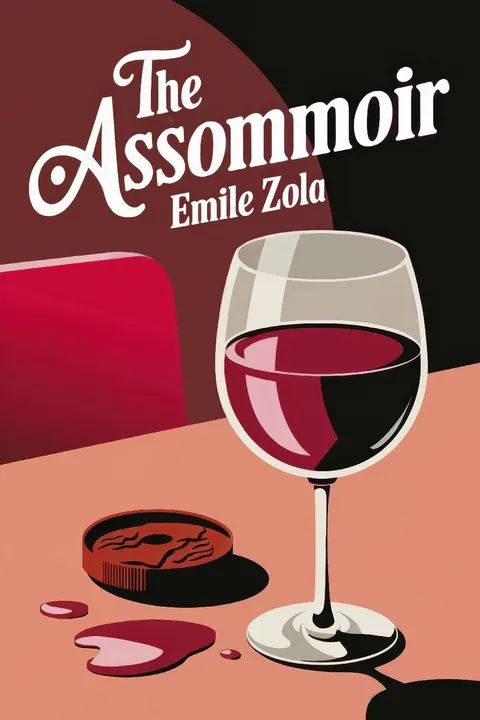
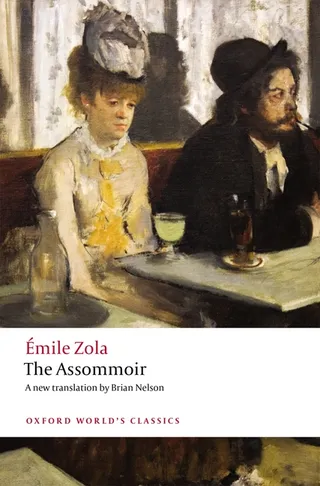
She wanted so little. A clean laundry shop. Honest work. A roof over her children's heads. Respectability.
Gervaise Macquart arrives in Paris abandoned and pregnant, but she refuses to surrender to poverty's undertow. Through sheer will, she builds what she's dreamed of-her own laundry, a wedding, a home. For a few precious years, she almost escapes. The white-hot iron hisses over fine linen. Customers pay on time. Her children eat every day.
Then the assommoir claims her husband. That dingy drinking establishment on the corner, its cheap liquor turning workers into shambling wrecks, reaches out with patient cruelty. Coupeau's descent into alcoholism becomes Gervaise's descent into hell. Bills mount. The laundry fails. Hunger returns. And Gervaise herself, who swore she'd never touch the stuff, discovers that poverty and despair have their own terrible thirst.
Émile Zola's 1877 masterpiece shocked France with its unflinching portrait of working-class Paris. Written in the crude argot of the streets-language no "serious" literature had dared use-The Assommoir became both scandalous bestseller and social revelation. Critics condemned it as obscene, filthy, an insult to French workers. Workers themselves recognized in Gervaise's tragedy their own impossible struggle against forces-economic, social, chemical-designed to crush them.
Zola spent months researching laundries, tenements, and drinking establishments in working-class Paris. He documented wages, rents, alcohol consumption, the exact mechanics of poverty's grinding machinery. But he created more than documentary-he created Gervaise, one of literature's most fully human characters, whose dreams and defeats embody the brutal cost of inequality.
The seventh volume of the Rougon-Macquart cycle-where Zola transforms social analysis into tragedy and working-class life into unforgettable art.
Still devastating. Still essential.
Émile Zola
Émile Zola (2 April 1840 - 29 September 1902) was a French novelist, playwright, journalist, the best-known practitioner of the literary school of naturalism, and an important contributor to the development of theatrical naturalism. He was a major figure in the political liberalization of France and in the exoneration of the falsely accused and convicted army officer Alfred Dreyfus.Zola was nominated for the first and second Nobel Prize in Literature in 1901 and 1902. He wrote every day for around 30 years and is considered to be a significant influence on writers that are credited with the creation of new journalism: Wolfe, Capote, Thompson, Mailer, Didion, Talese and others.
More by Émile Zola



Why Readwise Books?
Readwise Books is an ebook & audiobook platform that automatically logs how much you and your friends read, making it fun and easy to read more. Learn more →