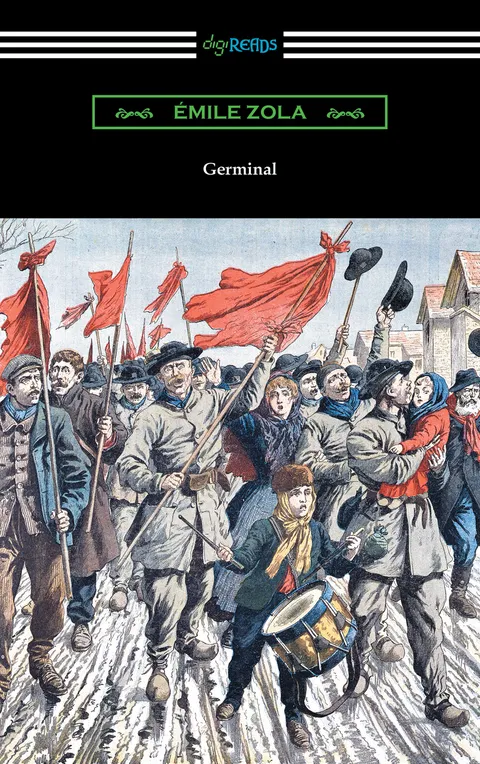
Germinal (Translated by Havelock Ellis)
Report an issue
Tell us what's wrong and we'll take a look.
Thanks – we got it. We'll review and follow up if needed.
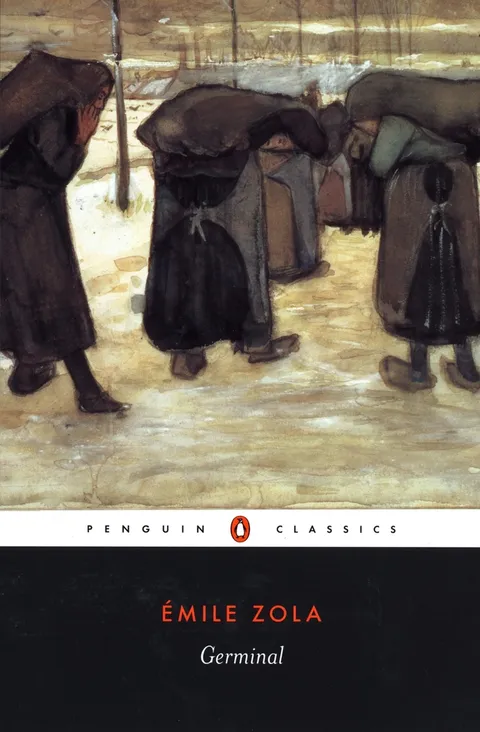
Originally published in serial form in 1884 to 1885, “Germinal” is Émile Zola’s realistic depiction of the coalminers’ strike in northern France in the 1860s. In this faithful translation from the original French by Havelock Ellis, the story centers on Étienne Lantier, a young migrant worker who arrives at the coalmining town of Montsou in search of work. Set against a backdrop of extreme poverty and oppression, “Germinal” is the story of the idealistic but naive Étienne, who embraces the ideals of the socialistic movement and goes on to lead a strike of the coalminers with disastrous consequences. In turns harrowing and violent, Zola brilliantly describes scenes of riots and dramatic rescues, while at the same time bringing to life the characters’ romances, passions, and frailties. Based on exhaustive research of coalmining and the worker’s movement, “Germinal” established Zola as a pioneer of the realist movement. Recognized as one of Zola’s masterpieces, “Germinal” would widely become associated with the struggle of the working class and the socialistic movement that dominated the political environment of Europe at the end of the 19th and beginning of the 20th century. This edition includes a biographical afterword.
Emile Zola
Émile Zola was a French writer who is recognized as an exemplar of literary naturalism and for his contributions to the development of theatrical naturalism. Zola’s best-known literary works include the twenty-volume Les Rougon-Macquart, an epic work that examined the influences of violence, alcohol and prostitution on French society through the experiences of two families, the Rougons and the Macquarts. Other remarkable works by Zola include Contes à Ninon, Les Mystères de Marseille, and Thérèse Raquin.
In addition to his literary contributions, Zola played a key role in the Dreyfus Affair of the late nineteenth and early twentieth century. His newspaper article J’Accuse accused the highest levels of the French military and government of obstruction of justice and anti-semitism, for which he was convicted of libel in 1898. After a brief period of exile in England, Zola returned to France where he died in 1902. Émile Zola is buried in the Panthéon alongside other esteemed literary figures Victor Hugo and Alexandre Dumas.
More by Emile Zola






Why Readwise Books?
Readwise Books is an ebook & audiobook platform that automatically logs how much you and your friends read, making it fun and easy to read more. Learn more →