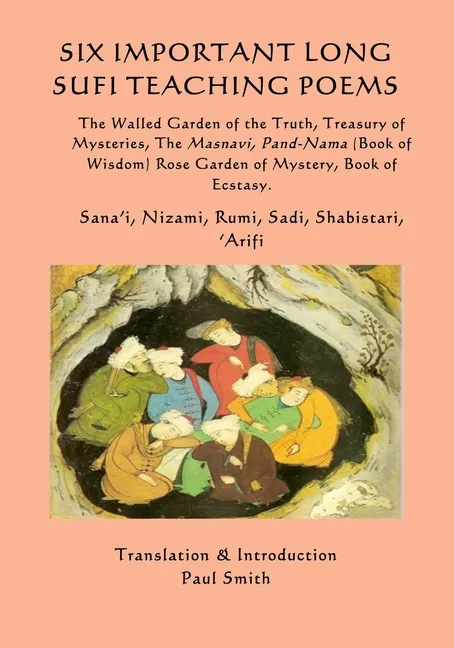
Six Important Long Sufi Teaching Poems
The Walled Garden of the Truth, Treasury of Mysteries, The Masnavi, Pand-Nama (Book of Wisdom) Rose Garden of Mystery & Book of Ecstasy
Report an issue
Tell us what's wrong and we'll take a look.
Thanks – we got it. We'll review and follow up if needed.
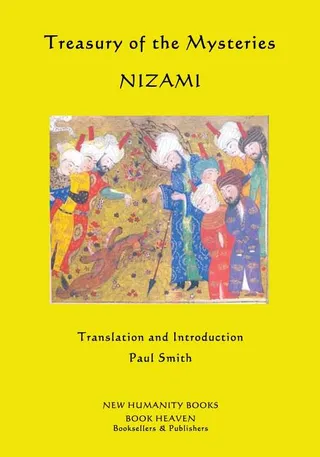
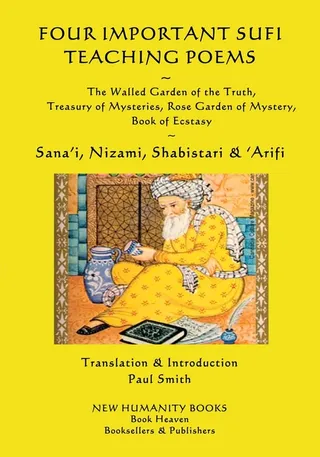
SIX IMPORTANT LONG SUFI TEACHING POEMS The Walled Garden of the Truth, Treasury of Mysteries, The Masnavi, Pand-Nama (Book of Wisdom) Rose Garden of Mystery & Book of Ecstasy Sana'i, Nizami, Rumi, Sadi, Shabistari & 'Arifi Translation & Introduction Paul Smith The Walled Garden of the Truth of Sana'i is a poem of mystical teachings intermingled with proverbs, fables, anecdotes and even obscene stories. The uncommon manner in which Sana'i introduced and explained the esoteric teachings of Sufism through the medium of poetry was the key to its popularity and lasting value. It is still widely considered by scholars to be the first great mystical poem in Persian. Treasury of the Mysteries is one most beautiful mystic poem in the Persian language. Every line of his Treasury of the Mysteries is a living witness to his absolute certainty that piety, devotion, humility and self-forgetfulness are the corner stones of total annihilation, which in turn is necessary for unification with God and the foundation of the edifice of eternal life. The Masnavi of Rumi is a 6 volume teaching Sufi Poem in the form of the masnavi & it is considerd the greatest masterpiece in this form. Here are translated the opening stories in the correct form. Sadi composed a Sufi teaching poem in masnavi form... Pand-Nama (The Book of Wisdom) and these short sayings are as wise and as relevant today as they were back then. Rose Garden of Mystery was composed as a 1000 couplet long masnavi poem in the form of questions and answers on spiritual matters by Mahmud Shabistari of Tabriz in 1317. It has been regarded as one of the finest books on Sufism. Written by 'Arifi (1389 - 1449) the Hal-nama or Book of Ecstasy often referred to as 'The Ball & Polo-stick' is an allegory in which the ball and the polo-stick are personified as types of Sufi mystical love and all the images are from the game of polo or as it was known at the time in Persia as chaugan. The correct form of the masnavi has been kept in all poems but one and each has an informative Introduction on the poet's life and times and poetry. Chapter on Sufis & Dervishes: Their Art and Use of Poetry, Glossary. Bibliographies. Large format paperback 7" x 10" Pages 801. Paul Smith is a poet, author and translator of many books of Sufi poets of the Persian, Arabic, Urdu, Turkish, Pashtu and other languages... including Hafiz, Sadi, Nizami, Rumi, 'Attar, Sana'i, Jahan Khatun, Obeyd Zakani, Nesimi, Kabir, Anvari, Ansari, Jami, Khayyam, Rudaki, Yunus Emre, Iqbal, Ghalib, Seemab, Jigar, Mahsati, Zauq, Faizi, Lalla Ded and many others, as well as his own poetry, fiction, plays, biographies, children's books and a dozen screenplays. amazon.com/author/smithpa

Rumi
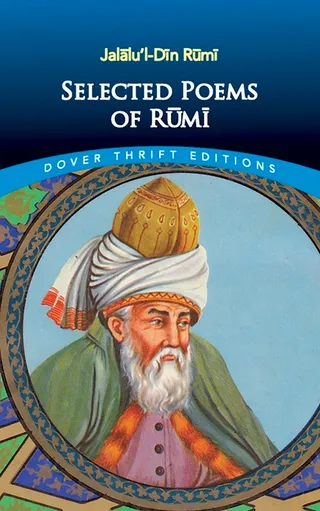
"Rumi (30 September 1207 - 17 December 1273), was a 13th-century Persian poet, Hanafi faqih, Islamic scholar, Maturidi theologian and Sufi mystic originally from Greater Khorasan in Greater Iran. Rumi's influence transcends national borders and ethnic divisions: Iranians, Tajiks, Turks, Greeks, Pashtuns, other Central Asian Muslims, as well as Muslims of the Indian subcontinent have greatly appreciated his spiritual legacy for the past seven centuries. His poems have been widely translated into many of the world's languages and transposed into various formats. Rumi has been described as the ""most popular poet"" and the ""best selling poet"" in the United States.Rumi's works are written mostly in Persian, but occasionally he also used Turkish, Arabic and Greek in his verse. His Masnavi (Mathnawi), composed in Konya, is considered one of the greatest poems of the Persian language. His works are widely read today in their original language across Greater Iran and the Persian-speaking world. Translations of his works are very popular, most notably in Turkey, Azerbaijan, the United States and South Asia. His poetry has influenced not only Persian literature, but also the literary traditions of the Ottoman Turkish, Chagatai, Urdu, Bengali and Pashto languages."
More by Rumi




Why Readwise Books?
Readwise Books is an ebook & audiobook platform that automatically logs how much you and your friends read, making it fun and easy to read more. Learn more →