Report an issue
Tell us what's wrong and we'll take a look.
Thanks – we got it. We'll review and follow up if needed.
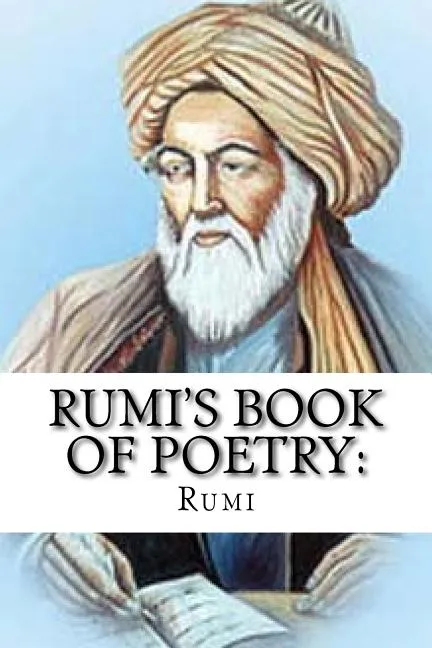
An enchanting poet, an insightful scholar, and a noted jurist, Rumi is a historical figure whose work has persisted over centuries. The universal nature of his writing has managed to transcend national and cultural boundaries and his poems have been cemented in the curricula and imaginations of people around the world. Jalal ad-Din Muhammad Rumi, more commonly known as Rumi, was born in 1207. The exact date of his birth is unknown, and the suspected date varies depending on the historian. Scholars have had better luck narrowing down his place of birth. Rumi was either born in Wakhsh, which was located in present-day Tajikistan or in Balkh, present day Afghanistan. His father was a theologian and a jurist, a man whose work would arguably impact the course of young Rumi's life. It is difficult to separate the man from the myth when outlining Rumi's family background. There are claims that Rumi's family was descended from the Caliph Abu Bakr, one of the Prophet Muhammad's trusted advisors. Historians have largely classified this a myth along with other claims that tie the family's lineage to royalty.
Rumi
"Rumi (30 September 1207 - 17 December 1273), was a 13th-century Persian poet, Hanafi faqih, Islamic scholar, Maturidi theologian and Sufi mystic originally from Greater Khorasan in Greater Iran. Rumi's influence transcends national borders and ethnic divisions: Iranians, Tajiks, Turks, Greeks, Pashtuns, other Central Asian Muslims, as well as Muslims of the Indian subcontinent have greatly appreciated his spiritual legacy for the past seven centuries. His poems have been widely translated into many of the world's languages and transposed into various formats. Rumi has been described as the ""most popular poet"" and the ""best selling poet"" in the United States.Rumi's works are written mostly in Persian, but occasionally he also used Turkish, Arabic and Greek in his verse. His Masnavi (Mathnawi), composed in Konya, is considered one of the greatest poems of the Persian language. His works are widely read today in their original language across Greater Iran and the Persian-speaking world. Translations of his works are very popular, most notably in Turkey, Azerbaijan, the United States and South Asia. His poetry has influenced not only Persian literature, but also the literary traditions of the Ottoman Turkish, Chagatai, Urdu, Bengali and Pashto languages."
More by Rumi


Why Readwise Books?
Readwise Books is an ebook & audiobook platform that automatically logs how much you and your friends read, making it fun and easy to read more. Learn more →