Report an issue
Tell us what's wrong and we'll take a look.
Thanks – we got it. We'll review and follow up if needed.
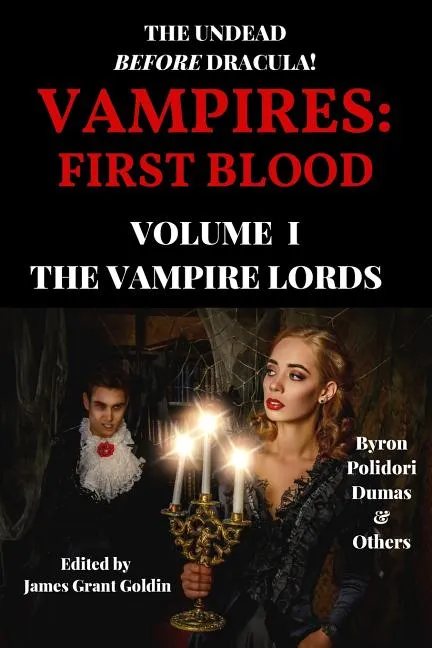
Who are the literary ancestors of Dracula? How did the classic vampire--the tall, dark, elegant aristocrat with an endless life and an unquenchable thirst for blood--become a mass-media star? James Grant Goldin presents a curated anthology of the original texts, some freshly translated, that trace the evolution of the vampire lord in the 18th and 19th centuries. Newspaper accounts of "real" vampires in the Austro-Hungarian Empire bring word of a new kind of monster to England, France, and Germany in the 1700s. Poets experiment with the vampire, often emphasizing sexual undercurrents ignored or glossed over in official reports. In the early 1800s, George Gordon, Lord Byron, provides the template for all male vampires to come: a brooding aristocrat, irresistibly attractive but cursed to bring doom to those around him. After the Byronesque Lord Ruthven in John Polidori's seminal "The Vampyre: A Tale," almost all vampires will be literal aristocrats -- a metamorphosis from the bloodsucking peasants of the 18th century. A secret society of vampires hold elegant balls in the heart of Moscow, Sir Francis Varney stalks an English country house in the early Victorian Age, and the sexy Carpathian Count Kostaki menaces a beautiful woman half a century before Bram Stoker's "Dracula." VAMPIRES: FIRST BLOOD VOLUME I - THE VAMPIRE LORDS collects the original adventures of the nosferatu who set the stage for Dracula, Barnabas, Lestat, and Edward -- bringing them out of the dark shadows and back to the attention of 21st century readers, complete with introductory notes and detailed glossaries to make these stories of the undead come alive for a new generation.
"Arnold Paul" by Calmet and others
"The Vampire" by Ossenfelder
"The Vampyre" by Stagg
"The Burial: A Fragment" by Byron
"The Vampyre" by Polidori
"The Family of the Vourdalak" by Tolstoy
"Ghoul" (excerpt) by Tolstoy
"Varney the Vampyre" (excerpts) by Rymer
"The Pale Lady" by Dumas and Bocage
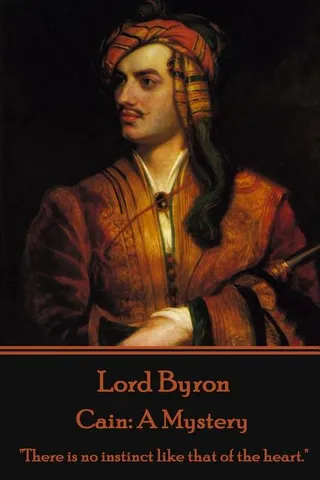
Lord Byron
Lord Byron was an English poet and the most infamous of the English Romantics, glorified for his immoderate ways in both love and money. Benefitting from a privileged upbringing, Byron published the first two cantos of Childe Harold’s Pilgrimage upon his return from his Grand Tour in 1811, and the poem was received with such acclaim that he became the focus of a public mania. Following the dissolution of his short-lived marriage in 1816, Byron left England amid rumours of infidelity, sodomy, and incest.
In self-imposed exile in Italy Byron completed Childe Harold and Don Juan. He also took a great interest in Armenian culture, writing of the oppression of the Armenian people under Ottoman rule; and in 1823, he aided Greece in its quest for independence from Turkey by fitting out the Greek navy at his own expense.
Two centuries of references to, and depictions of Byron in literature, music, and film began even before his death in 1824.
More by Lord Byron



Why Readwise Books?
Readwise Books is an ebook & audiobook platform that automatically logs how much you and your friends read, making it fun and easy to read more. Learn more →