Treatise on Rhetoric
Report an issue
Tell us what's wrong and we'll take a look.
Thanks – we got it. We'll review and follow up if needed.
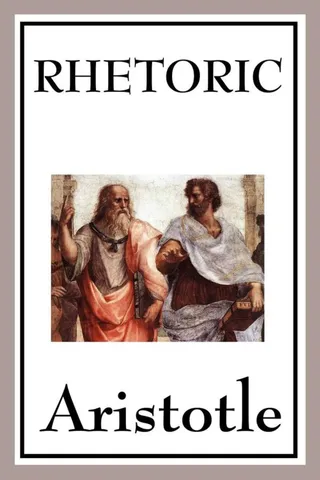
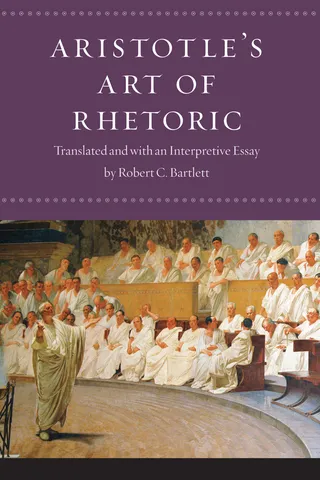
The art of rhetoric, or persuasive public speaking, was brought to perfection in classical Athens. During the fifth and fourth centuries B.C.E., rhetoric came under the scrutiny of the philosophers. While Plato dismissed public speaking as mere hackwork devoid of a rational basis, Aristotle defended it as a true art.
In his great work, Treatise on Rhetoric, which laid the foundations of philosophical rhetoric, Aristotle deals at length with the processes of argument and with style, including rhythm and meter. For Aristotle, rhetoric is a brand of the art of reasoning; its function he defends not as mere persuasion, but as "the observing of all of the available means of persuasion."
Aristotle
Aristotle was an ancient Greek philosopher and scientist whose works have profoundly influenced philosophical discourse and scientific investigation from the later Greek period through to modern times. A student of Plato, Aristotle’s writings cover such disparate topics as physics, zoology, logic, aesthetics, and politics, and as one of the earliest proponents of empiricism, Aristotle advanced the belief that people’s knowledge is based on their perceptions.
In addition to his own research and writings, Aristotle served as tutor to Alexander the Great, and established a library at the Lyceum. Although it is believed that only a small fraction of his original writings have survived, works such as The Art of Rhetoric, Nicomachean Ethics, Poetics, and Metaphysics have preserved Aristotle’s legacy and influence through the ages.
More by Aristotle









Why Readwise Books?
Readwise Books is an ebook & audiobook platform that automatically logs how much you and your friends read, making it fun and easy to read more. Learn more →