
Report an issue
Tell us what's wrong and we'll take a look.
Thanks – we got it. We'll review and follow up if needed.
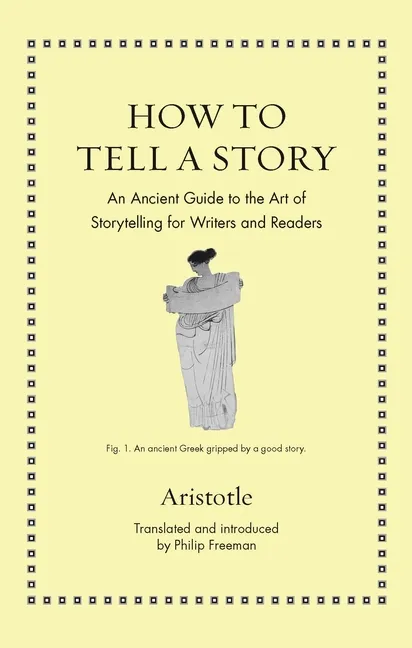
An inviting and highly readable new translation of Aristotle’s complete Poetics—the first and best introduction to the art of writing and understanding stories
Aristotle’s Poetics is the most important book ever written for writers and readers of stories—whether novels, short fiction, plays, screenplays, or nonfiction. Aristotle was the first to identify the keys to plot, character, audience perception, tragic pleasure, and dozens of other critical points of good storytelling. Despite being written more than 2,000 years ago, the Poetics remains essential reading for anyone who wants to learn how to write a captivating story—or understand how such stories work and achieve their psychological effects. Yet for all its influence, the Poetics is too little read because it comes down to us in a form that is often difficult to follow, and even the best translations are geared more to specialists than to general readers who simply want to grasp Aristotle’s profound and practical insights. In How to Tell a Story, Philip Freeman presents the most readable translation of the Poetics yet produced, making this indispensable handbook more accessible, engaging, and useful than ever before.
In addition to its inviting and reliable translation, a commentary on each section, and the original Greek on facing pages, this edition of the Poetics features unique bullet points, chapter headings, and section numbers to help guide readers through Aristotle’s unmatched introduction to the art of writing and reading stories.
Aristotle
Aristotle was an ancient Greek philosopher and scientist whose works have profoundly influenced philosophical discourse and scientific investigation from the later Greek period through to modern times. A student of Plato, Aristotle’s writings cover such disparate topics as physics, zoology, logic, aesthetics, and politics, and as one of the earliest proponents of empiricism, Aristotle advanced the belief that people’s knowledge is based on their perceptions.
In addition to his own research and writings, Aristotle served as tutor to Alexander the Great, and established a library at the Lyceum. Although it is believed that only a small fraction of his original writings have survived, works such as The Art of Rhetoric, Nicomachean Ethics, Poetics, and Metaphysics have preserved Aristotle’s legacy and influence through the ages.
More by Aristotle




Philip Freeman
Edited and translated by
Philip Freeman is the Orlando W. Qualley Chair of Classical Languages at Luther College in Decorah, Iowa. He earned his PhD from Harvard University in classical philology and Celtic languages and literature. His books have been reviewed in the New York Times, Wall Street Journal, and other national publications.


Why Readwise Books?
Readwise Books is an ebook & audiobook platform that automatically logs how much you and your friends read, making it fun and easy to read more. Learn more →