Report an issue
Tell us what's wrong and we'll take a look.
Thanks – we got it. We'll review and follow up if needed.
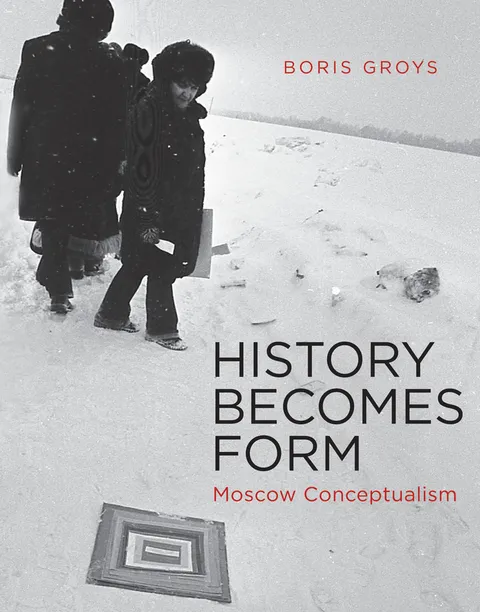
In the 1970s and 1980s, a group of "unofficial" artists in Moscow--artists not recognized by the state, not covered by state-controlled media, and cut off from wider audiences--created artworks that gave artistic form to a certain historical moment: the experience of Soviet socialism. The Moscow conceptualists not only reflected and analyzed by artistic means a spectacle of Soviet life but also preserved its memory for a future that turned out to be different from the officially predicted one. They captured both the shabby austerity of everyday Soviet life and the utopian energy of Soviet culture. In History Becomes Form, Boris Groys offers a contemporary's account of what he calls the most interesting Russian artistic phenomenon since the Russian avant-garde.
The book collects Groys's essays on Moscow conceptualism, most of them written after his emigration to the West in 1981. The individual artists of the group--including Ilya Kabakov, Lev Rubinstein, and Ivan Chuikov--became known in the West after perestroika, but until now the artistic movement as a whole has received little attention. Groys's account sheds light not only on the Moscow Conceptualists and their work but also on the dilemmas of Soviet artists during the cold war.
Boris Groys
Boris Groys is Professor of Aesthetics, Art History and Media Theory at the Center for Art and Media Technology in Karlsruhe and, since 2005, the Global Distinguished Professor in the Faculty of Arts and Science, NYU. He has published numerous books, including On the New, Introduction to Antiphilosophy, The Total Art of Stalinism, and In the Flow.
More by Boris Groys


Why Readwise Books?
Readwise Books is an ebook & audiobook platform that automatically logs how much you and your friends read, making it fun and easy to read more. Learn more →