Why We Are At War: Messages To The Congress, January To April 1917
Report an issue
Tell us what's wrong and we'll take a look.
Thanks – we got it. We'll review and follow up if needed.
Why We Are at War: Messages to the Congress January to April 1917 is a historical political document collection that presents presidential war messages by Woodrow Wilson during the United States’ decision to enter World War I. It is a key source for understanding early 20th-century American foreign policy and wartime justification speeches. The work compiles official communications delivered by Woodrow Wilson to the U.S. Congress between January and April 1917, explaining the political and moral reasoning behind entering the First World War. Central to these messages is the issue of unrestricted submarine warfare conducted by Germany, which threatened American lives, trade routes, and national security. Wilson frames the conflict not only as a defence of national interests but also as a broader struggle for democracy and international peace. The text emphasizes democratic values, global cooperation, and the responsibility of the United States in shaping a post-war order based on justice and collective security. It reflects the evolution of American foreign policy World War I presidential addresses and highlights the ideological shift toward international engagement. As a historical source, it contributes to understanding World War I diplomacy, political rhetoric, and the development of modern global governance ideals.
Woodrow Wilson
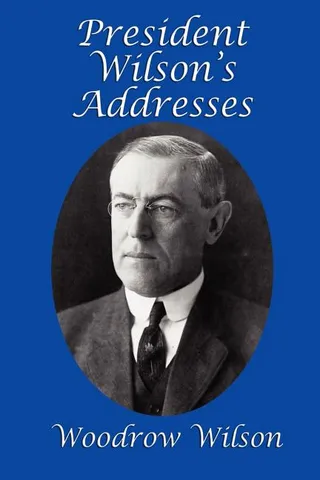
Thomas Woodrow Wilson, born to Joseph Ruggles Wilson and Jessie Janet Woodrow, was a political leader and academic who served as the 28th president of the United States from 1913 to 1921. Before his presidency, he was a prominent scholar and served as president of Princeton University, where he emphasized educational reform and academic excellence. Later, as governor of New Jersey, he became known for progressive legislative achievements that raised his national profile. A key figure of the Democratic Party, he won the 1912 presidential election by promoting a platform of reform called the New Freedom, which sought to tackle monopolies and strengthen individual rights. His presidency included significant legislative accomplishments such as the Federal Reserve Act and the Clayton Antitrust Act. During World War I, he initially kept the U.S. neutral but ultimately led the nation into the conflict, framing it as a fight to make the world safe for democracy. After the war, he championed the League of Nations, although the U.S. Senate rejected its membership. His later years were marked by declining health following a severe stroke in 1919, and he remained physically incapacitated for much of his final term. He died in 1924.
More by Woodrow Wilson


Why Readwise Books?
Readwise Books is an ebook & audiobook platform that automatically logs how much you and your friends read, making it fun and easy to read more. Learn more →