Truth and Justification
Report an issue
Tell us what's wrong and we'll take a look.
Thanks – we got it. We'll review and follow up if needed.
How can the norms that underpin the linguistically structured world in which we live be brought into step with the contingency of the development of socio-cultural forms of life? How can the idea that our world exists independently of our attempts to describe it be reconciled with the insight that we can never reach reality without the mediation of language and that 'bare' reality is therefore unattainable?
In Knowledge and Human Interests Habermas answered these questions with reference to a weak naturalism and a transcendental-pragmatic realism. Since then, however, he has developed a formal pragmatic theory which is based on an analysis of speech acts and language use. In this new volume Habermas takes up the philosophical questions of truth, objectivity and reality from the perspective of his linguistically-based pragmatic theory. The final section addresses the limits of philosophy and reassesses the relation between theory and practice from a perspective that could be described as 'post-Marxist'.
This volume, now available in paperback as well, by one of the world's leading philosophers will be essential reading for students and scholars of philosophy, social theory and the humanities and social sciences generally.
Jürgen Habermas
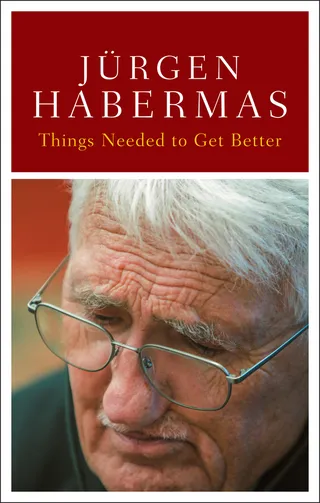
J�rgen Habermas was born in 1929, and grew up in Gummersbach, Germany. He was educated at the Universities of Gottingen, Bonn, and Zurich, after which he worked for a while as a freelance journalist. In 1956 he became Adorno's assistant at the University of Frankfurt. From 1961 to 1964 he taught philosophy in Heidelberg, and from 1964 to 1971, philosophy and sociology in Frankfurt. From 1971 to 1983 he was Director of the Max Planck Institute for Research into the Life Conditions of the Scientific-Technical World, in Sternberg. Among his influential publications in English are: Knowledge and Human Interests (1971), Theory and Practice (1973), The Theory of Communicative Action (1984/1987), and Moral Consciousness and Communicative Action (1990).
More by Jürgen Habermas



Why Readwise Books?
Readwise Books is an ebook & audiobook platform that automatically logs how much you and your friends read, making it fun and easy to read more. Learn more →