Report an issue
Tell us what's wrong and we'll take a look.
Thanks – we got it. We'll review and follow up if needed.
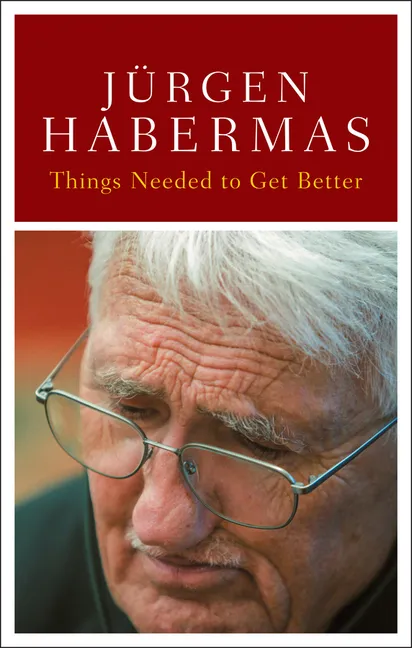
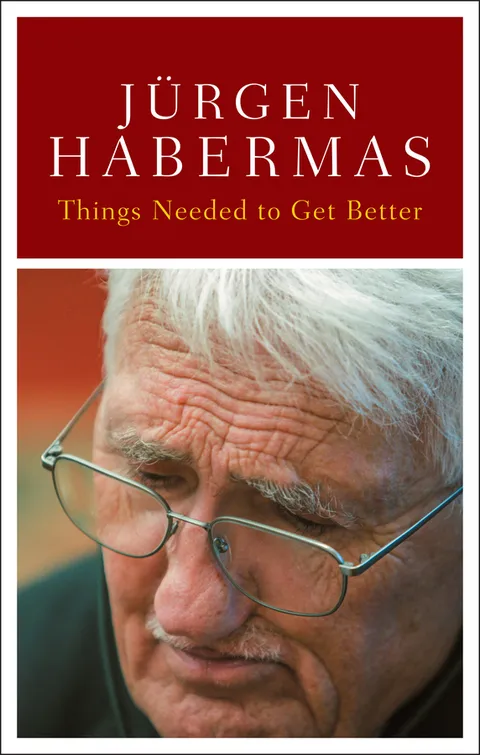
In this book Jürgen Habermas offers a wide-ranging reflection on his life and work and on the factors that shaped the development of his thought. He discusses the motives behind his work, the circumstances under which it emerged and the changes it has undergone over the course of his long and productive career. He speaks about the events and the texts that played a decisive role in his thinking and he recounts key encounters with colleagues. The image that emerges is that of a richly intertwined network of relationships which covers large swathes of the intellectual map of the twentieth century and reaches through to the present day.
Looking back at the development of his thought, Habermas discusses the specific historical circumstances that shaped his generation, identifies key experiences with his intellectual mentors, explores recent historical tendencies and political beliefs and talks about his own scholarly works and their reception. Time and again we see the normative impulse that lies behind so much of Habermas’s work: ‘I view the attempt to make the world even the tiniest bit better, or even just to be part of the effort to stave off the constant threats of regression that we face, as an utterly admirable motive.’
This autobiographical self-reflection by one of the greatest philosophers of our time will be of interest to a wide readership.
Jürgen Habermas
J�rgen Habermas was born in 1929, and grew up in Gummersbach, Germany. He was educated at the Universities of Gottingen, Bonn, and Zurich, after which he worked for a while as a freelance journalist. In 1956 he became Adorno's assistant at the University of Frankfurt. From 1961 to 1964 he taught philosophy in Heidelberg, and from 1964 to 1971, philosophy and sociology in Frankfurt. From 1971 to 1983 he was Director of the Max Planck Institute for Research into the Life Conditions of the Scientific-Technical World, in Sternberg. Among his influential publications in English are: Knowledge and Human Interests (1971), Theory and Practice (1973), The Theory of Communicative Action (1984/1987), and Moral Consciousness and Communicative Action (1990).
More by Jürgen Habermas








Why Readwise Books?
Readwise Books is an ebook & audiobook platform that automatically logs how much you and your friends read, making it fun and easy to read more. Learn more →