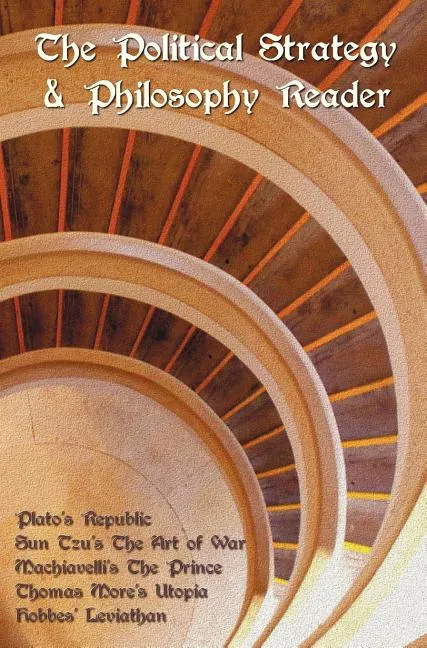
The Political Strategy and Philosophy Reader including (complete and unabridged)
Plato's Republic, Sun Tzu's The Art of War, Machiavelli's The Prince, Thomas More's Utopia and Hobbes' Leviathan
Report an issue
Tell us what's wrong and we'll take a look.
Thanks – we got it. We'll review and follow up if needed.
This Reader contains the five most influential books ever written about political strategy and philosophy. Plato's "Republic" is a Socratic dialogue written c380 BC. It focusses on the definition of justice and the order and character of the just city-state and the just man. It is Plato's most famous work and is one of the most influential works of philosophy and political theory. Sun Tzu's "The Art of War" is an ancient Chinese military treatise. It was written by a high-ranking military general, strategist and tactician, probably between. 481 BC and 403 BC. The book has thirteen chapters, each of which is devoted to one aspect of warfare. It is the definitive work on military strategy and tactics of its time and has continued to inspire leaders through the ages. Thomas More's Utopia was published in 1516 and is a fictional work exploring political philosophy. The story depicts a fictional island society and its religious, social and political customs. Machiavelli's "The Prince" was published in 1532 and is a political treatise by the Italian diplomat, historian and political theorist. It is one of the first works of modern political philosophy, in which the effective truth is taken to be more important than any abstract ideal. Hobbes' Leviathan is concerned with the structure of society and legitimate government, and is regarded as one of the earliest and most influential examples of social contract theory. It was written during the English Civil War (1642-1651) and argues for a social contract and rule by an absolute sovereign.
Thomas More
Thomas More balanced public duty with deep moral conviction, leaving a legacy shaped by intellect and principle. Born in 1478 in London, he rose to become a lawyer, scholar, and Lord Chancellor under Henry VIII before his dramatic fall from favor. A philosophy grounded in conscience, faith, and humanist ideals guided his life, often placing moral truth above political power.Intellectual curiosity and social critique define the heart of his work. In works such as Utopia, he crafted a cohesive and fluid vision of an ideal society governed by reason, communal life, and moral order, contrasting it with the injustices of his own time. Thoughtful narrative reveals how justice, discipline, and shared responsibility intertwine, inviting readers to question the structures of society.Enduring influence has made him a central figure in philosophy, politics, and literature. Readers and thinkers across centuries have debated and drawn from his ideas on society, governance, and moral responsibility. Today, his work remains widely read, valued for its insight, courage, and lasting impact on political thought and literary tradition.
More by Thomas More








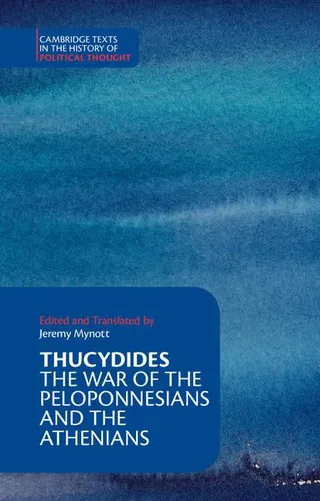


Niccolo Machiavelli
Niccolo Machiavelli was an Italian politician, diplomat, founding father of political science, and author of the preeminent political treatise, The Prince. Born in Florence, Italy, Machiavelli held many government posts over his lifetime and often took leading roles in important diplomatic missions. During his time visiting other countries and nation states, Machiavelli was exposed to the politics of figures like Ceasare Borgia and King Louis XII, experiences which would inform his writings on state-building and politics. Machiavelli’s political career came to an abrupt end when the Medici overthrew Florence, and he was held as a prisoner under the new regime. Tortured for a short time, he was released without admitting to any crime or treason. At this point, Machiavelli retired and turned to intellectual and philosophical pursuits, producing his two major works, The Prince and Discourses on the First Ten Books of Titus Livy. He died in 1527 at the age of 58.
More by Niccolo Machiavelli


Why Readwise Books?
Readwise Books is an ebook & audiobook platform that automatically logs how much you and your friends read, making it fun and easy to read more. Learn more →