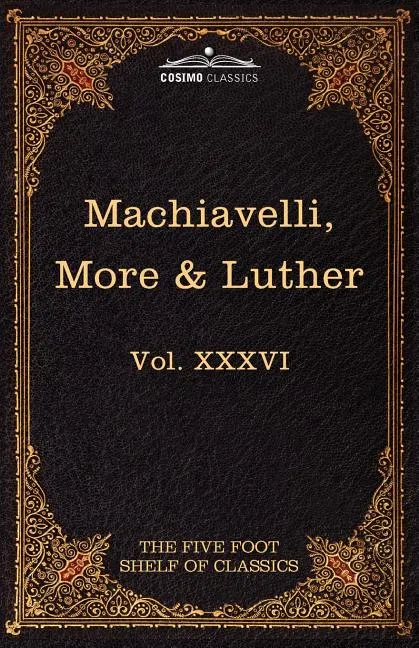
Machiavelli, More & Luther
The Five Foot Shelf of Classics, Vol. XXXVI (in 51 Volumes)
Report an issue
Tell us what's wrong and we'll take a look.
Thanks – we got it. We'll review and follow up if needed.
Author name not noted above: Martin Luther and William Roper. Translator names not noted above: N.H. Thompson, Ralph Robinson, R.S. Grignon, and C.A. Buchheim. Originally published between 1909 and 1917 under the name "Harvard Classics," this stupendous 51-volume set-a collection of the greatest writings from literature, philosophy, history, and mythology-was assembled by American academic CHARLES WILLIAM ELIOT (1834-1926), Harvard University's longest-serving president. Also known as "Dr. Eliot's Five Foot Shelf," it represented Eliot's belief that a basic liberal education could be gleaned by reading from an anthology of works that could fit on five feet of bookshelf. Volume XXXVI features essential works from 16th-century Europe: - The Prince, the infamous 1513 collection of thoughts on politics and ethics by Italian diplomat and philosopher NICCOLÒ MACHIAVELLI (1469-1527) - Utopia, by English scholar SIR THOMAS MORE (1478-1535), a 1516 dissertation on the pressing social issues of his day - The Life of Sir Thomas More, dating from the 1550s, by his son-in-law, English writer WILLIAM ROPER (c. 1498-1578) - The Ninety-Five Theses, the 1517 criticism of the Church that started the Protestant Revolution by German theologian MARTIN LUTHER (1483-1546), plus his "Address to the Christian Nobility" and "Concerning Christian Liberty" English statesman and writer SIR THOMAS MORE (1478-1535) is best remembered as both a humanist scholar and a religious martyr: he was beheaded by King Henry VIII for refusing to acknowledge the monarch as the head of the Church of England.

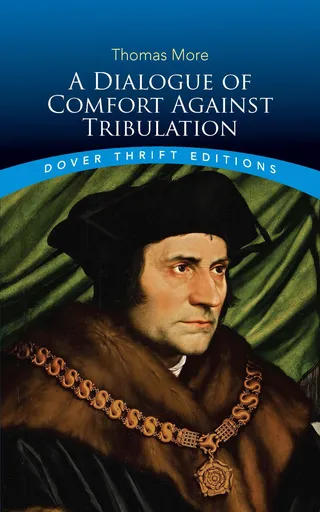
Thomas More
Thomas More balanced public duty with deep moral conviction, leaving a legacy shaped by intellect and principle. Born in 1478 in London, he rose to become a lawyer, scholar, and Lord Chancellor under Henry VIII before his dramatic fall from favor. A philosophy grounded in conscience, faith, and humanist ideals guided his life, often placing moral truth above political power.Intellectual curiosity and social critique define the heart of his work. In works such as Utopia, he crafted a cohesive and fluid vision of an ideal society governed by reason, communal life, and moral order, contrasting it with the injustices of his own time. Thoughtful narrative reveals how justice, discipline, and shared responsibility intertwine, inviting readers to question the structures of society.Enduring influence has made him a central figure in philosophy, politics, and literature. Readers and thinkers across centuries have debated and drawn from his ideas on society, governance, and moral responsibility. Today, his work remains widely read, valued for its insight, courage, and lasting impact on political thought and literary tradition.
More by Thomas More







Why Readwise Books?
Readwise Books is an ebook & audiobook platform that automatically logs how much you and your friends read, making it fun and easy to read more. Learn more →