Report an issue
Tell us what's wrong and we'll take a look.
Thanks – we got it. We'll review and follow up if needed.

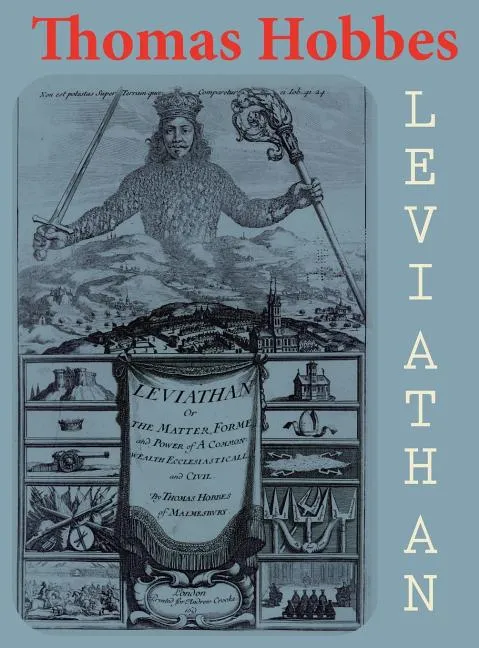
Thomas Hobbes argues for a social contract and rule by an absolute sovereign. Influenced by the English Civil War, Hobbes wrote that chaos or civil war-situations identified with a state of nature and the famous motto Bellum omnium contra omnes ("the war of all against all")-could only be averted by strong central government. He thus denied any right of rebellion toward the social contract, which would be later added by John Locke and conserved by Jean-Jacques Rousseau. (However, Hobbes did discuss the possible dissolution of the State. Since the social contract was made to institute a state that would provide for the "peace and defense" of the people, the contract would become void as soon as the government no longer protected its citizens. By virtue of this fact, man would automatically return to the state of nature until a new contract is made).
Thomas Hobbes
Thomas Hobbes (1588–1679) was an English philosopher, considered to be one of the founders of modern political philosophy. He is best known for his 1651 book Leviathan, which expounded an influential formulation of social contract theory. Hobbes also contributed to a diverse array of other fields, including history, jurisprudence, geometry, physics, theology, and ethics.
More by Thomas Hobbes





Why Readwise Books?
Readwise Books is an ebook & audiobook platform that automatically logs how much you and your friends read, making it fun and easy to read more. Learn more →