Report an issue
Tell us what's wrong and we'll take a look.
Thanks – we got it. We'll review and follow up if needed.
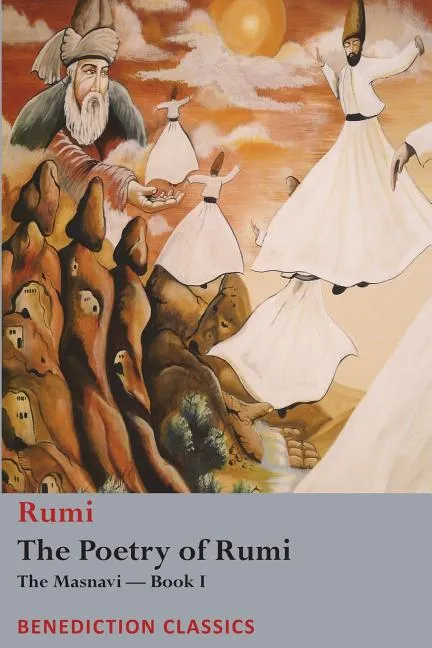
Rumi's Masnavi is the unrivalled masterpiece of Sufi spirituality. It guides the student on the path to union with God by way of fables and sayings that are "easier than easy to the ignorant, but harder than hard to the wise".
Rumi is respected throughout the Islamic world and his influence crosses national and sectarian boundaries. Today, in translation, he is in fact America's favourite poet.
The Masnavi, originally written in Persia verse, is filled with references to the Koran and Islamic history and is notoriously difficult to translate. Reynold Nicholson (Sir Thomas Adams's Professor of Arabic, University of Cambridge) has delivered this most precise and authoritative translation, rendering the meaning as clear as one can expect of a mystical work.
Rumi
"Rumi (30 September 1207 - 17 December 1273), was a 13th-century Persian poet, Hanafi faqih, Islamic scholar, Maturidi theologian and Sufi mystic originally from Greater Khorasan in Greater Iran. Rumi's influence transcends national borders and ethnic divisions: Iranians, Tajiks, Turks, Greeks, Pashtuns, other Central Asian Muslims, as well as Muslims of the Indian subcontinent have greatly appreciated his spiritual legacy for the past seven centuries. His poems have been widely translated into many of the world's languages and transposed into various formats. Rumi has been described as the ""most popular poet"" and the ""best selling poet"" in the United States.Rumi's works are written mostly in Persian, but occasionally he also used Turkish, Arabic and Greek in his verse. His Masnavi (Mathnawi), composed in Konya, is considered one of the greatest poems of the Persian language. His works are widely read today in their original language across Greater Iran and the Persian-speaking world. Translations of his works are very popular, most notably in Turkey, Azerbaijan, the United States and South Asia. His poetry has influenced not only Persian literature, but also the literary traditions of the Ottoman Turkish, Chagatai, Urdu, Bengali and Pashto languages."
More by Rumi


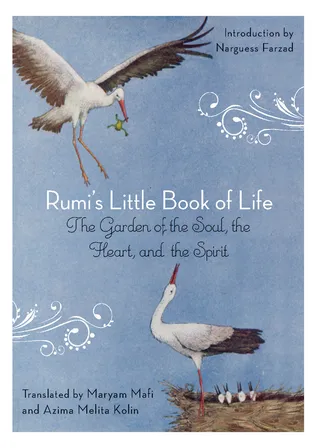
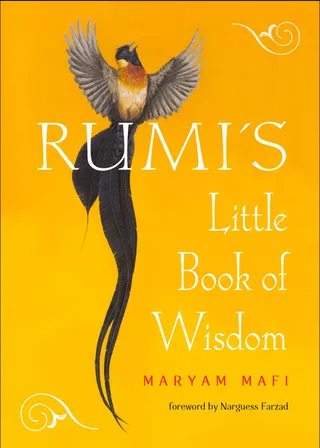
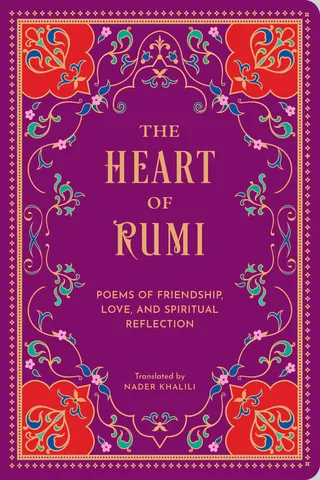
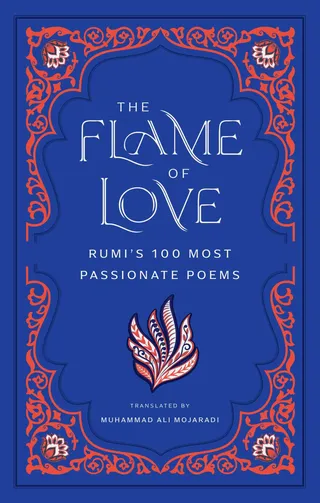
Reynold a Nicholson
Translated by
British scholar, translator, and writer on Islamic mysticism and literature, Reynold Alleyne Nicholson (1868-1945). He was raised in Keighley, England, attended Cambridge University for his undergraduate studies, and then he taught Persian and Arabic at the Universities of Cambridge and London. The writings of Rumi, the famous Persian poet and Sufi mystic, particularly his greatest work, "The Masnavi," are best known through Nicholson's translations. In addition, he translated and published analyses of other Sufi poets and thinkers including Attar, Hafiz, and Ibn Arabi. Nicholson's research on Islamic mysticism was esteemed in his day and is still seen as being significant now. He made a great contribution to the understanding of Sufism in the West by highlighting its intellectual and spiritual aspects and dispelling myths and stereotypes. The famous Edward Cadbury Medal was given to Nicholson in 1936. He was a member of the Royal Asiatic Society and the recipient of various honors and accolades for his contributions. Up to the time of his death in 1945, he kept up his writing and teaching careers and left behind a body of profound research on Islamic literature and mysticism.


Why Readwise Books?
Readwise Books is an ebook & audiobook platform that automatically logs how much you and your friends read, making it fun and easy to read more. Learn more →