
The Complete Poems
Report an issue
Tell us what's wrong and we'll take a look.
Thanks – we got it. We'll review and follow up if needed.
A PRAYER O Lord, the hard-won miles Have worn my stumbling feet: Oh, soothe me with thy smiles, And make my life complete. The thorns were thick and keen Where'er I trembling trod; The way was long between My wounded feet and God. Where healing waters flow Do thou my footsteps lead. My heart is aching so; Thy gracious balm I need. PASSION AND LOVE A maiden wept and, as a comforter, Came one who cried, "I love thee," and he seized Her in his arms and kissed her with hot breath, That dried the tears upon her flaming cheeks. While evermore his boldly blazing eye Burned into hers; but she uncomforted Shrank from his arms and only wept the more. Then one came and gazed mutely in her face With wide and wistful eyes; but still aloof He held himself; as with a reverent fear, As one who knows some sacred presence nigh. And as she wept he mingled tear with tear, That cheered her soul like dew a dusty flower, - Until she smiled, approached, and touched his hand![Pg 12]
Paul Laurence Dunbar
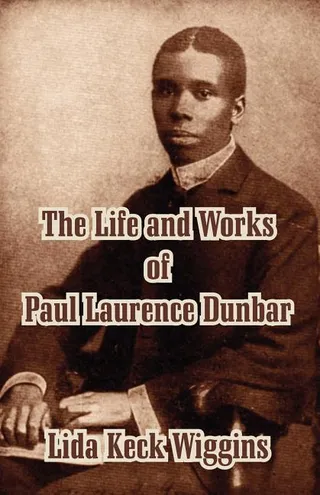
Paul Laurence Dunbar (1872-1906) was an African American poet, novelist, and playwright. Born in Dayton, Ohio, Dunbar was the son of parents who were emancipated from slavery in Kentucky during the American Civil War. He began writing stories and poems as a young boy, eventually publishing some in a local newspaper at the age of sixteen. In 1890, Dunbar worked as a writer and editor for The Tattler, Dayton's first weekly newspaper for African Americans, which was a joint project undertaken with the help of Dunbar's friends Wilbur and Orville Wright. The following year, after completing school, he struggled to make ends meet with a job as an elevator operator and envisioned for himself a career as a professional writer. In 1893, he published Oak and Ivy, a debut collection of poetry blending traditional verse and poems written in dialect. In 1896, a positive review of his collection Majors and Minors from noted critic William Dean Howells established Dunbar's reputation as a rising star in American literature. Over the next decade, Dunbar wrote ten more books of poetry, four collections of short stories, four novels, a musical, and a play. In his brief career, Dunbar became a respected advocate for civil rights, participating in meetings and helping to found the American Negro Academy. His lyrics for In Dahomey (1903) formed the centerpiece to the first musical written and performed by African Americans on Broadway, and many of his essays and poems appeared in the nation's leading publications, including Harper's Weekly and the Saturday Evening Post. Diagnosed with tuberculosis in 1900, however, Dunbar's health steadily declined in his final years, leading to his death at the age of thirty-three while at the height of his career.
More by Paul Laurence Dunbar







Why Readwise Books?
Readwise Books is an ebook & audiobook platform that automatically logs how much you and your friends read, making it fun and easy to read more. Learn more →