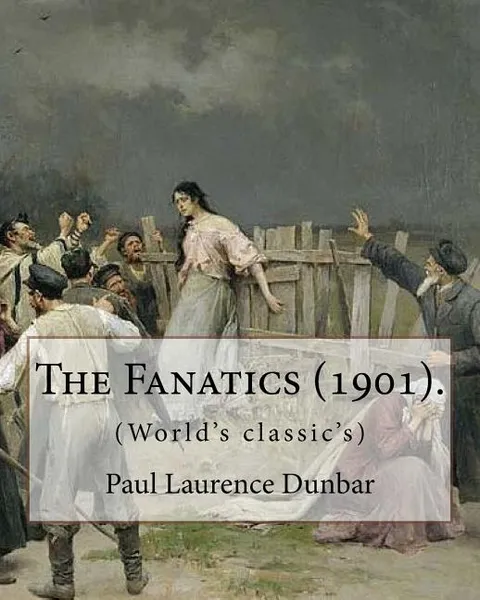
The Fanatics (1901). By
Paul Laurence Dunbar, (World's classic's).: Paul Laurence Dunbar (June 27, 1872 - February 9, 1906) was an American poet, novelist, and playwright of the late 19th and early 20th centuries.
Report an issue
Tell us what's wrong and we'll take a look.
Thanks – we got it. We'll review and follow up if needed.

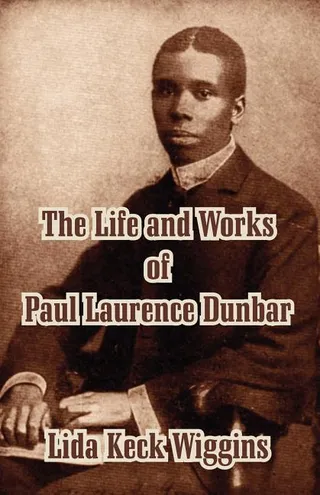
.........as a leper's, and even the empty sleeve, the badge of honor to so many of them, would read only to these people, "Unclean, unclean." He was bending his steps towards his father's house, absorbed in bitter thoughts, when a sort of divination, rather than the appearance of things roused him from his revery. He looked around upon the place, the houses, the lawns, and then a lighted window caught his eye and he realized that he was passing Bradford Waters' house. "I wonder if she is back at home?" he said. "I caused her so much grief." He passed through the gate, and crept up to the window. The light shone through a thin shade, but he could see nothing within the house. After a short while, however, he heard the sound of women's voices, and one was hers. Without warning, all the pent-up feeling of the past three years burst forth in the cry, " Mary!" "What's that?" cried some one within, but there was no answer save the hurried tread of feet across the floor. Aware of what he had done, he was hurrying away, when the front door was thrown open, and he saw her before him standing in a flood of light. Then he could not go. He stood transfixed until she walked down the steps to him crying," Robert, Robert, I was sure you would come!" And all he could do was to bow his head and murmur, "Thank God." She took him by the hand and led him into the house, he unresisting. "Here is Robert," she said to Nannie. "Did I not tell you he would come?" "Yes, and I am glad with you." Her greeting of Robert was tender, almost sisterly. As soon as she could do so tactfully, she left the room, and Van Doren's glance followed her questioningly. He could not understand her subdued manner, her sad face. Mary saw the look in his eyes and asked, "Do you not know, ........... Paul Laurence Dunbar (June 27, 1872 - February 9, 1906) was an American poet, novelist, and playwright of the late 19th and early 20th centuries. Born in Dayton, Ohio, to parents who had been enslaved in Kentucky before the American Civil War, Dunbar began to write stories and verse when still a child; he was president of his high school's literary society. He published his first poems at the age of 16 in a Dayton newspaper. Much of Dunbar's more popular work in his lifetime was written in the Negro dialect associated with the antebellum South, though he also used the Midwestern regional dialect of James Whitcomb Riley. Dunbar's work was praised by William Dean Howells, a leading editor associated with the Harper's Weekly, and Dunbar was one of the first African-American writers to establish an international reputation. He wrote the lyrics for the musical comedy In Dahomey (1903), the first all-African-American musical produced on Broadway in New York. The musical later toured in the United States and the United Kingdom. Dunbar also wrote in conventional English in other poetry and novels. Since the late 20th century, scholars have become more interested in these other works. Suffering from tuberculosis, which then had no cure, Dunbar died in Dayton at the age of 33...............
Paul Laurence Dunbar
Paul Laurence Dunbar (1872-1906) was an African American poet, novelist, and playwright. Born in Dayton, Ohio, Dunbar was the son of parents who were emancipated from slavery in Kentucky during the American Civil War. He began writing stories and poems as a young boy, eventually publishing some in a local newspaper at the age of sixteen. In 1890, Dunbar worked as a writer and editor for The Tattler, Dayton's first weekly newspaper for African Americans, which was a joint project undertaken with the help of Dunbar's friends Wilbur and Orville Wright. The following year, after completing school, he struggled to make ends meet with a job as an elevator operator and envisioned for himself a career as a professional writer. In 1893, he published Oak and Ivy, a debut collection of poetry blending traditional verse and poems written in dialect. In 1896, a positive review of his collection Majors and Minors from noted critic William Dean Howells established Dunbar's reputation as a rising star in American literature. Over the next decade, Dunbar wrote ten more books of poetry, four collections of short stories, four novels, a musical, and a play. In his brief career, Dunbar became a respected advocate for civil rights, participating in meetings and helping to found the American Negro Academy. His lyrics for In Dahomey (1903) formed the centerpiece to the first musical written and performed by African Americans on Broadway, and many of his essays and poems appeared in the nation's leading publications, including Harper's Weekly and the Saturday Evening Post. Diagnosed with tuberculosis in 1900, however, Dunbar's health steadily declined in his final years, leading to his death at the age of thirty-three while at the height of his career.
More by Paul Laurence Dunbar








Why Readwise Books?
Readwise Books is an ebook & audiobook platform that automatically logs how much you and your friends read, making it fun and easy to read more. Learn more →