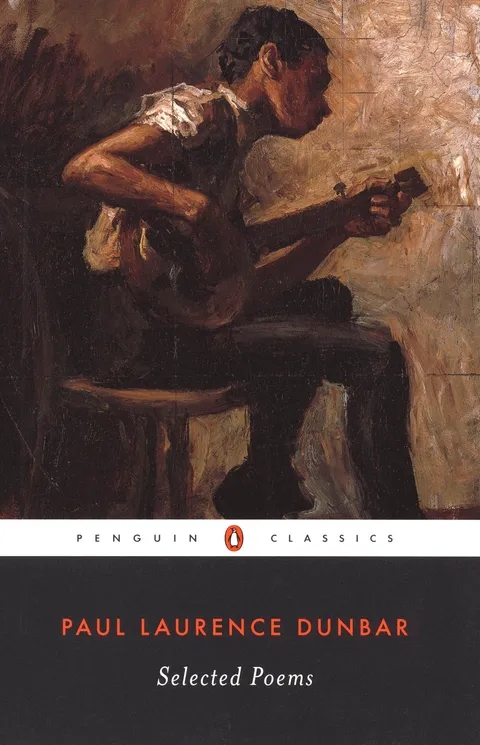
Selected Poems
Report an issue
Tell us what's wrong and we'll take a look.
Thanks – we got it. We'll review and follow up if needed.
Dialect poems by one of the nineteenth century's most talented African American lyricists
Paul Laurence Dunbar was “the most promising young colored man” in nineteenth-century America, according to Frederick Douglass, and subsequently one of the most controversial. His plantation lyrics, written while he was an elevator boy in Ohio, established Dunbar as the premier writer of dialect poetry and garnered him international recognition. More than a vernacular lyricist, Dunbar was also a master of classical poetic forms, who helped demonstrate to post–Civil War America that literary genius did not reside solely in artists of European descent. William Dean Howells called Dunbar’s dialect poems “evidence of the essential unity of the human race, which does not think or feel black in one and white in another, but humanly in all.”
For more than seventy years, Penguin has been the leading publisher of classic literature in the English-speaking world. With more than 1,700 titles, Penguin Classics represents a global bookshelf of the best works throughout history and across genres and disciplines. Readers trust the series to provide authoritative texts enhanced by introductions and notes by distinguished scholars and contemporary authors, as well as up-to-date translations by award-winning translators.
Paul Laurence Dunbar
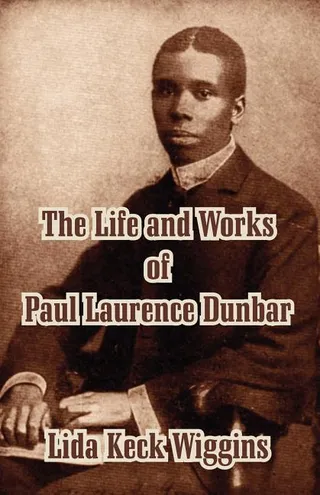
Paul Laurence Dunbar (1872-1906) was an African American poet, novelist, and playwright. Born in Dayton, Ohio, Dunbar was the son of parents who were emancipated from slavery in Kentucky during the American Civil War. He began writing stories and poems as a young boy, eventually publishing some in a local newspaper at the age of sixteen. In 1890, Dunbar worked as a writer and editor for The Tattler, Dayton's first weekly newspaper for African Americans, which was a joint project undertaken with the help of Dunbar's friends Wilbur and Orville Wright. The following year, after completing school, he struggled to make ends meet with a job as an elevator operator and envisioned for himself a career as a professional writer. In 1893, he published Oak and Ivy, a debut collection of poetry blending traditional verse and poems written in dialect. In 1896, a positive review of his collection Majors and Minors from noted critic William Dean Howells established Dunbar's reputation as a rising star in American literature. Over the next decade, Dunbar wrote ten more books of poetry, four collections of short stories, four novels, a musical, and a play. In his brief career, Dunbar became a respected advocate for civil rights, participating in meetings and helping to found the American Negro Academy. His lyrics for In Dahomey (1903) formed the centerpiece to the first musical written and performed by African Americans on Broadway, and many of his essays and poems appeared in the nation's leading publications, including Harper's Weekly and the Saturday Evening Post. Diagnosed with tuberculosis in 1900, however, Dunbar's health steadily declined in his final years, leading to his death at the age of thirty-three while at the height of his career.
More by Paul Laurence Dunbar







Why Readwise Books?
Readwise Books is an ebook & audiobook platform that automatically logs how much you and your friends read, making it fun and easy to read more. Learn more →