
The City on Mallington Moor
Report an issue
Tell us what's wrong and we'll take a look.
Thanks – we got it. We'll review and follow up if needed.
The City of the Sun is a dialogue between "a Grandmaster of the Knights Hospitaller and a Genoese Sea-Captain." The book describes a theocratic society where goods, women, and children are held in common. It also resembles the City of Adocentyn in the Picatrix, an Arabic guide to magical town planning. In the final part of the work, Campanella prophesies-- in the veiled language of astrology-- that the Spanish kings, in alliance with the Pope, are destined to be the instruments of a Divine Plan: the final victory of the True Faith and its diffusion in the whole world.
Lord Dunsany
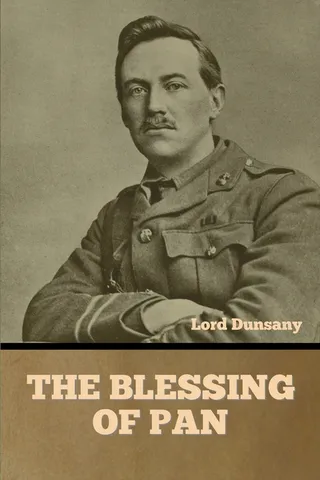
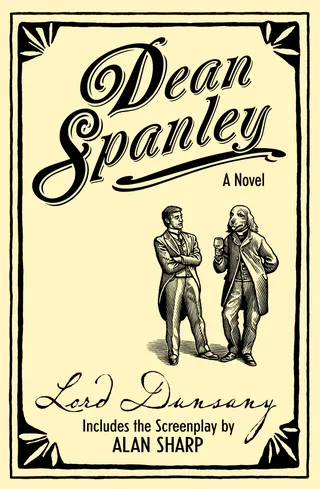
Lord Dunsany was born in London in 1878, the scion of an Anglo-Irish family that could trace its ancestry to the twelfth century. In 1905 he self-published The Gods of Pegana, and its critical and popular success impelled the publication of numerous other collections of short stories, including A Dreamer's Tales, The Book of Wonder, and The Last Book of Wonder. Dunsany also distinguished himself as a dramatist, and his early plays-collected in Five Plays and Plays of Gods and Men-were successful in Ireland, England, and the United States. Dunsany was seriously injured during the Dublin riots of 1916, and he also saw action in World War I as a member of the Coldstream Guards. In the 1920s Dunsany began writing novels, among them The King of Elfland's Daughter and The Blessing of Pan. He also wrote many tales of the loquacious clubman Joseph Jorkens, eventually collected in five volumes. His later plays include If, Plays of Near and Far, Seven Modern Comedies, and Plays for Earth and Air. By the 1930s, encouraged by W. B. Yeats and others to write about his native Ireland, he produced The Curse of the Wise Woman, The Story of Mona Sheehy, and other novels. His later tales were gathered in The Man Who Ate the Phoenix and The Little Tales of Smethers, but many works remain uncollected. Lord Dunsany died at Dunsany Castle in County Meath, Ireland, in 1957. He is recognized as a leading figure in the development of modern fantasy literature, influencing such writers as J. R. R. Tolkien, H. P. Lovecraft, and Ursula K. Le Guin.
More by Lord Dunsany




Why Readwise Books?
Readwise Books is an ebook & audiobook platform that automatically logs how much you and your friends read, making it fun and easy to read more. Learn more →