Report an issue
Tell us what's wrong and we'll take a look.
Thanks – we got it. We'll review and follow up if needed.
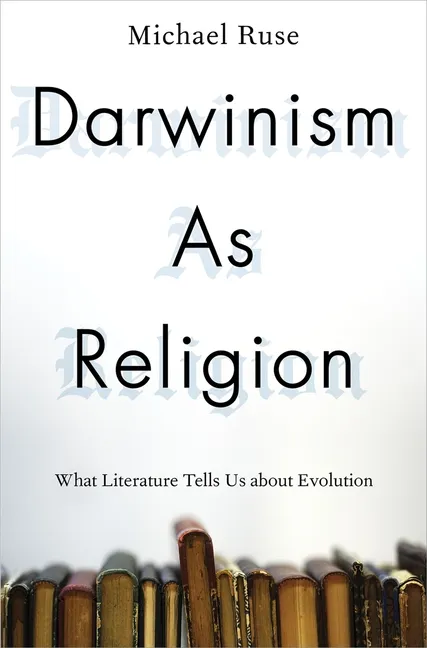
Drawing on a deep understanding of both the science and the history, Michael Ruse surveys the naturalistic thinking about the origins of organisms, including the origins of humankind, as portrayed in novels and in poetry, taking the story from its beginnings in the Age of Enlightenment in the 18th century right up to the present. He shows that, contrary to the opinion of many historians of the era, there was indeed a revolution in thought and that the English naturalist Charles Darwin was at the heart of it. However, contrary also to what many think, this revolution was not primarily scientific as such, but more religious or metaphysical, as people were taken from the secure world of the Christian faith into a darker, more hostile world of evolutionism.
In a fashion unusual for the history of ideas, Ruse turns to the novelists and poets of the period for inspiration and information. His book covers a wide range of creative writers - from novelists like Voltaire and poets like Erasmus Darwin in the eighteenth century, through the nineteenth century with novelists including Elizabeth Gaskell, George Eliot, Thomas Hardy, Henry James and H. G. Wells and poets including Robert Browning, Alfred Tennyson, Walt Whitman, Emily Dickinson and Gerard Manley Hopkins, and on to the twentieth century with novelists including Edith Wharton, D. H. Lawrence, John Steinbeck, William Golding, Graham Greene, Ian McEwan and Marilynne Robinson, and poets including Robert Frost, Edna St Vincent Millay and Philip Appleman. Covering such topics as God, origins, humans, race and class, morality, sexuality, and sin and redemption, and written in an engaging manner and spiced with wry humor, Darwinism as Religion gives us an entirely fresh, engaging and provocative view of one of the cultural highpoints of Western thought.



Why Readwise Books?
Readwise Books is an ebook & audiobook platform that automatically logs how much you and your friends read, making it fun and easy to read more. Learn more →