Report an issue
Tell us what's wrong and we'll take a look.
Thanks – we got it. We'll review and follow up if needed.
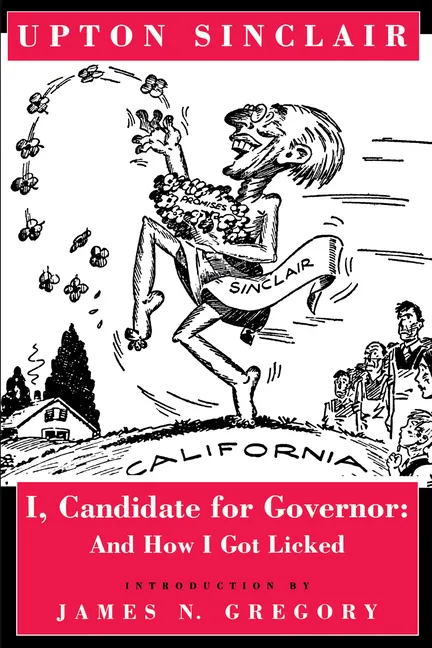
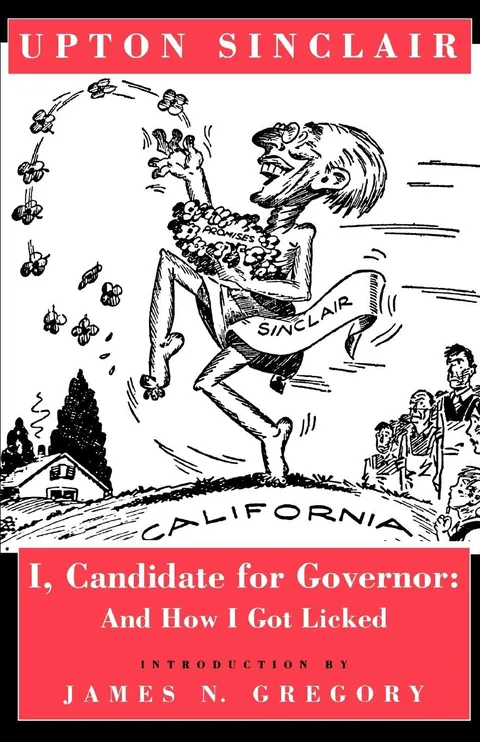
Here, reprinted for the first time since its original publication, is muckraking journalist Upton Sinclair's lively, caustic account of the 1934 election campaign that turned California upside down and almost won him the governor's mansion.
Using his "End Poverty in California" movement (more commonly called EPIC) as a springboard, Sinclair ran for governor as a Democrat, equipped with a bold plan to end the Depression in California by taking over idle land and factories and turning them into cooperative ventures for the unemployed. To his surprise, thousands rallied to the idea, converting what he had assumed would be another of his utopian schemes into a mass political movement of extraordinary dimensions. With a loosely knit organization of hundreds of local EPIC clubs, Sinclair overwhelmed the moderate Democratic opposition to capture the primary election. When it came to the general election, however, his opposition employed highly effective campaign tactics: overwhelming media hostility, vicious red-baiting and voter intimidation, high-priced dirty tricks. The result was a resounding defeat in November.
I, Candidate tells the story of Sinclair's campaign while also capturing the turbulent political mood of the 1930s. Employing his trademark muckraking style, Sinclair exposes the conspiracies of power that ensured big-money control over the media and other powerful institutions.
Here, reprinted for the first time since its original publication, is muckraking journalist Upton Sinclair's lively, caustic account of the 1934 election campaign that turned California upside down and almost won him the governor's mansion.
Usi
Upton Sinclair
Upton Sinclair (1878–1968) was a Pulitzer Prize–winning author, activist, and politician whose novel The Jungle (1906) led to the passage of the Federal Meat Inspection Act and the Pure Food and Drug Act. Born into an impoverished family in Baltimore, Maryland, Sinclair entered City College of New York five days before his fourteenth birthday. He wrote dime novels and articles for pulp magazines to pay for his tuition, and continued his writing career as a graduate student at Columbia University. To research The Jungle, he spent seven weeks working undercover in Chicago’s meatpacking plants. The book received great critical and commercial success, and Sinclair used the proceeds to start a utopian community in New Jersey. In 1915, he moved to California, where he founded the state’s ACLU chapter and became an influential political figure, running for governor as the Democratic nominee in 1934. Sinclair wrote close to one hundred books during his lifetime, including Oil! (1927), the inspiration for the 2007 movie There Will Be Blood; Boston (1928), a documentary novel revolving around the Sacco and Vanzetti case; The Brass Check, a muckraking exposé of American journalism, and the eleven novels in Pulitzer Prize–winning Lanny Budd series.
More by Upton Sinclair






Why Readwise Books?
Readwise Books is an ebook & audiobook platform that automatically logs how much you and your friends read, making it fun and easy to read more. Learn more →