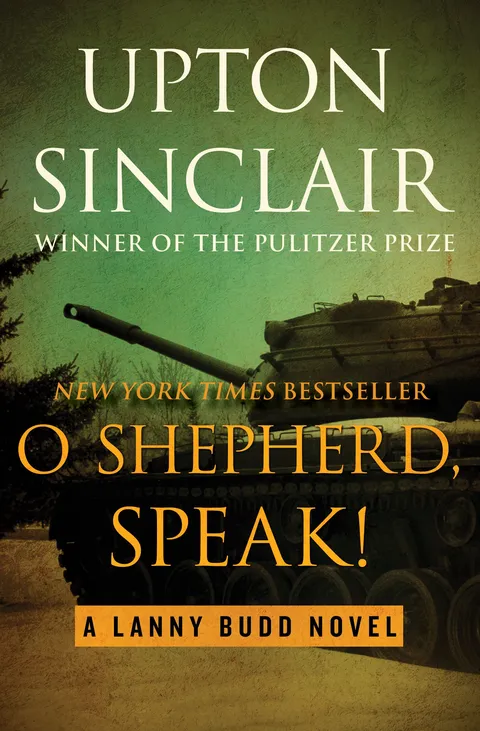
O Shepherd, Speak!
Report an issue
Tell us what's wrong and we'll take a look.
Thanks – we got it. We'll review and follow up if needed.
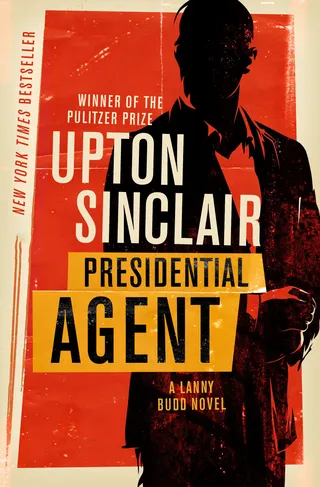
From the Pulitzer Prize–winning saga, an American spy witnesses the collapse of the Nazis, the bombing of Hiroshima, and the Nuremberg Trials. As a spy for President Franklin Roosevelt, Lanny Budd was able to infiltrate the inner circle of the Nazi high command and glean essential information on behalf of the Allied cause. Now, as the terrible global conflict approaches its long-awaited conclusion, the newly commissioned Captain Budd of the US Army is on hand to witness the final collapse of the Third Reich in the aftermath of the Battle of the Bulge. The nuclear destruction of Hiroshima and Nagasaki brings World War II to an end, but not even the death of Franklin Roosevelt can release Lanny from his obligations as Presidential Agent 103. A devastated Europe needs to be rebuilt, and there is a necessary reckoning still to come in the heart of defeated Germany, where the fanatics who murdered countless millions will stand trial for their crimes. O Shepherd, Speak! continues New York Times–bestselling author Upton Sinclair's Pulitzer Prize–winning dramatization of twentieth-century world history. Praise for the Lanny Budd Novels "Remarkably shrewd and often prescient." —The New York Times "Few works of fiction are more fun to read; fewer still make history half as clear, or as human." —Time "When people ask me what has happened in my long lifetime, I do not refer them to the newspaper files and to the authorities, but to [Sinclair's] novels." —George Bernard Shaw "The completest and most faithful portrait of that period that has been done or will likely be done." —H. G. Wells
Upton Sinclair
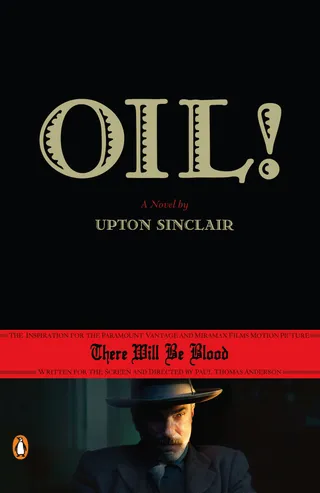
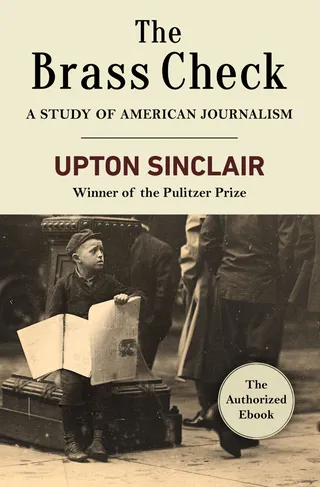
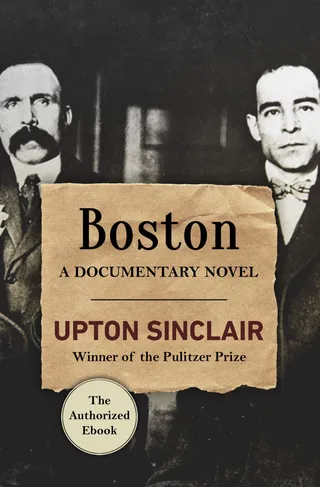
Upton Sinclair (1878–1968) was a Pulitzer Prize–winning author, activist, and politician whose novel The Jungle (1906) led to the passage of the Federal Meat Inspection Act and the Pure Food and Drug Act. Born into an impoverished family in Baltimore, Maryland, Sinclair entered City College of New York five days before his fourteenth birthday. He wrote dime novels and articles for pulp magazines to pay for his tuition, and continued his writing career as a graduate student at Columbia University. To research The Jungle, he spent seven weeks working undercover in Chicago’s meatpacking plants. The book received great critical and commercial success, and Sinclair used the proceeds to start a utopian community in New Jersey. In 1915, he moved to California, where he founded the state’s ACLU chapter and became an influential political figure, running for governor as the Democratic nominee in 1934. Sinclair wrote close to one hundred books during his lifetime, including Oil! (1927), the inspiration for the 2007 movie There Will Be Blood; Boston (1928), a documentary novel revolving around the Sacco and Vanzetti case; The Brass Check, a muckraking exposé of American journalism, and the eleven novels in Pulitzer Prize–winning Lanny Budd series.
More by Upton Sinclair





Why Readwise Books?
Readwise Books is an ebook & audiobook platform that automatically logs how much you and your friends read, making it fun and easy to read more. Learn more →