Report an issue
Tell us what's wrong and we'll take a look.
Thanks – we got it. We'll review and follow up if needed.
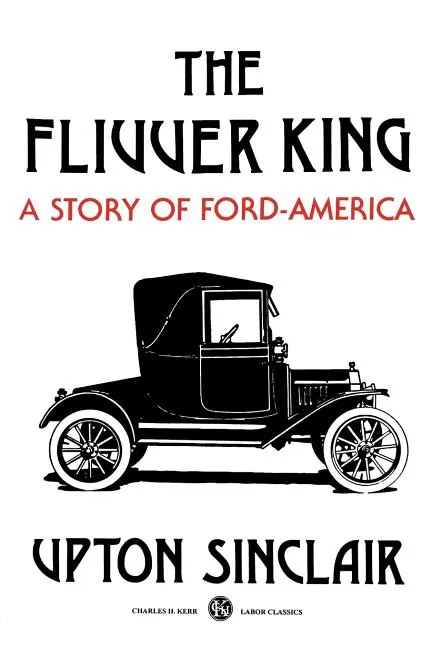
The Flivver King stands among the finest of modern American historical novels. It is history as it ought to be written - from the bottom up and the top down, with monumental sensitivity to the compromise and conflict between the two extremes. Its two stories - those of Henry Ford and Ford-worker Abner Shutt, unfold side by side, indeed dialectically. They are, in the end, one story: the saga of class and culture in 'Ford-America'. Workers and bosses, flappers and Klansmen, war and depression, Prohibition outlaws and high-society parties, unions and anti-union gun thugs - few aspects of American life in the first four decades of the last century are missing from this small masterpiece. The Flivver King sustains the same sure grasp of working class life which characterized Sinclair's earlier classic, The Jungle, but much less sentimentally and with a steadier focus on how alienated work breeds not only degradation but also resistance and revolt. Originally written in 1937 to aid the United Automobile Workers' organizing drive, The Flivver King answers the question "Why do we need a union?" with quiet eloquence. The Charles H. Kerr Company has reissued it as a great American novel and an important historical document, because that question has never gone away and is now more vital than ever. With an introduction from Steve Meyer.
Upton Sinclair
Upton Sinclair (1878–1968) was a Pulitzer Prize–winning author, activist, and politician whose novel The Jungle (1906) led to the passage of the Federal Meat Inspection Act and the Pure Food and Drug Act. Born into an impoverished family in Baltimore, Maryland, Sinclair entered City College of New York five days before his fourteenth birthday. He wrote dime novels and articles for pulp magazines to pay for his tuition, and continued his writing career as a graduate student at Columbia University. To research The Jungle, he spent seven weeks working undercover in Chicago’s meatpacking plants. The book received great critical and commercial success, and Sinclair used the proceeds to start a utopian community in New Jersey. In 1915, he moved to California, where he founded the state’s ACLU chapter and became an influential political figure, running for governor as the Democratic nominee in 1934. Sinclair wrote close to one hundred books during his lifetime, including Oil! (1927), the inspiration for the 2007 movie There Will Be Blood; Boston (1928), a documentary novel revolving around the Sacco and Vanzetti case; The Brass Check, a muckraking exposé of American journalism, and the eleven novels in Pulitzer Prize–winning Lanny Budd series.
More by Upton Sinclair






Why Readwise Books?
Readwise Books is an ebook & audiobook platform that automatically logs how much you and your friends read, making it fun and easy to read more. Learn more →