
Howdy Honey Howdy
Report an issue
Tell us what's wrong and we'll take a look.
Thanks – we got it. We'll review and follow up if needed.
This work has been selected by scholars as being culturally important, and is part of the knowledge base of civilization as we know it. This work was reproduced from the original artifact, and remains as true to the original work as possible. Therefore, you will see the original copyright references, library stamps (as most of these works have been housed in our most important libraries around the world), and other notations in the work.
This work is in the public domain in the United States of America, and possibly other nations. Within the United States, you may freely copy and distribute this work, as no entity (individual or corporate) has a copyright on the body of the work.
As a reproduction of a historical artifact, this work may contain missing or blurred pages, poor pictures, errant marks, etc. Scholars believe, and we concur, that this work is important enough to be preserved, reproduced, and made generally available to the public. We appreciate your support of the preservation process, and thank you for being an important part of keeping this knowledge alive and relevant.
Paul Laurence Dunbar
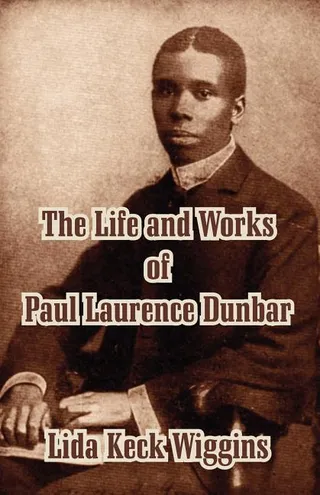
Paul Laurence Dunbar (1872-1906) was an American poet, novelist, and short-story writer born in Dayton, Ohio, to parents who had been enslaved. He attended Dayton's Central High School, where he wrote and took part in the school's literary life. After leaving school he worked as an elevator operator while building a readership for his poetry. He published his first collection, Oak and Ivy, in 1893 and followed it with Majors and Minors in 1895.Dunbar wrote in standard literary English as well as in dialect, and the two kinds of work formed part of the same career. His reputation grew after William Dean Howells drew attention to his poetry, particularly the dialect poems. Lyrics of Lowly Life (1896) helped bring his work to a national audience. His range can be heard in the difference between the tightly controlled public voice of We Wear the Mask and the speakers he gives more room to tell a story in verse.Dunbar traveled to Britain and also spent time working at the Library of Congress. He married the writer Alice Ruth Moore in 1898. Alongside his poetry he published stories and novels, including The Uncalled and The Sport of the Gods. The latter appeared in a magazine in 1901 and as a book the following year. It begins with a false accusation in the South and follows a Black family through the consequences of relocation to New York. The novel gives him the length to show how a single public wrong can affect people whose needs and chances differ markedly.Dunbar developed tuberculosis and died in Dayton at the age of thirty-three. His poetry has often been the route by which later readers encounter his work, and some of his poems have had substantial lives in quotation and performance. His prose gives another view of his interests. It can follow the institutions in which a person works, the streets through which a family moves, and the differences between the ways people talk at home and in public. In The Sport of the Gods those concerns are closely connected. The story follows a family as it loses the social standing it thought it had and discovers how differently each member can find a place elsewhere.
More by Paul Laurence Dunbar






Why Readwise Books?
Readwise Books is an ebook & audiobook platform that automatically logs how much you and your friends read, making it fun and easy to read more. Learn more →