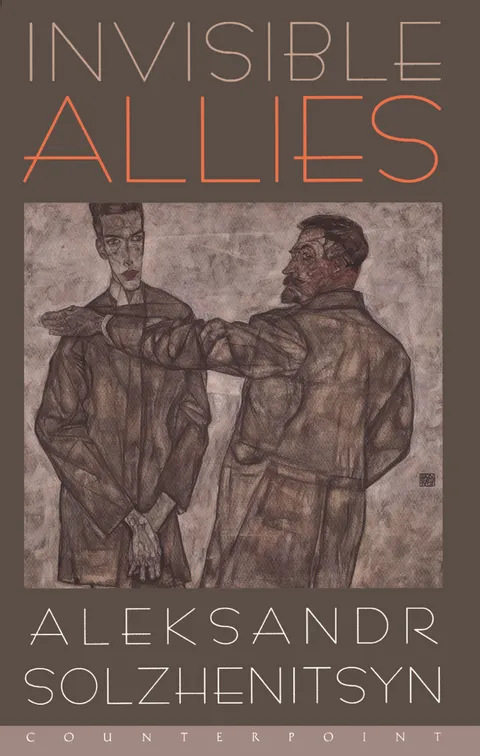
Invisible Allies
Report an issue
Tell us what's wrong and we'll take a look.
Thanks – we got it. We'll review and follow up if needed.
Now we are finally granted an intimate account of the extensive, ever-shifting network of individuals who risked life and liberty to ensure that Solzhenitsyn's works were kept safe, circulated in samizdat, and "exported" via illicit channels. These imperiled conspirators, often unknown to one another, shared a devotion to the dissident writer's work and a hatred of the regime that brought terror to every part of their lives. The circle included scholars and fellow writers and artists, but also such unlikely operatives as an elderly babushka who picked up and delivered manuscripts in her shopping bag.
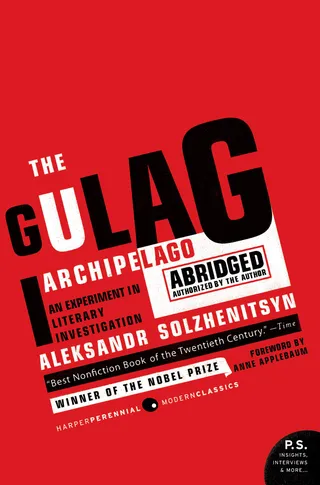
With tenderness, respect, and humor, Solzhenitsyn tells us of the fates of these partners in intrigue: the women who typed distribution copies of his works late into the night under the noses of prying neighbors; the correspondents and diplomats who covertly carried the microfilmed texts across borders; the farflung friends who hid various drafts of Solzhenitsyn's works anywhere they could--under an apple tree, beneath the bathtub, in a mathematics professor's loft with her canoe. In this group of deftly drawn portraits, Solzhenitsyn pays tribute to the anonymous heroes who evaded the KGB to bring The Gulag Archipelago and his many other works to the world.
Aleksandr I. Solzhenitsyn
After serving as a decorated captain in the Red Army during World War II, Aleksandr I. Solzhenitsyn (1918–2008) was sentenced in 1945 to eight years of hard labor for criticizing Stalin and the Soviet government in private letters. He vaulted from unknown schoolteacher to internationally famous writer in 1962 with the publication of his long short story One Day in the Life of Ivan Denisovich, and was awarded the Nobel Prize in Literature for 1970. The writer's increasingly vocal opposition to the regime resulted in another arrest, a charge of treason, and expulsion from the USSR in 1974, just weeks after The Gulag Archipelago, his epic history of the Soviet penal system, first appeared in the West. For eighteen years, he and his family lived in Vermont, where he wrote The Red Wheel. In 1994 he returned home to Moscow, where he died in 2008.
More by Aleksandr I. Solzhenitsyn







Why Readwise Books?
Readwise Books is an ebook & audiobook platform that automatically logs how much you and your friends read, making it fun and easy to read more. Learn more →