Report an issue
Tell us what's wrong and we'll take a look.
Thanks – we got it. We'll review and follow up if needed.
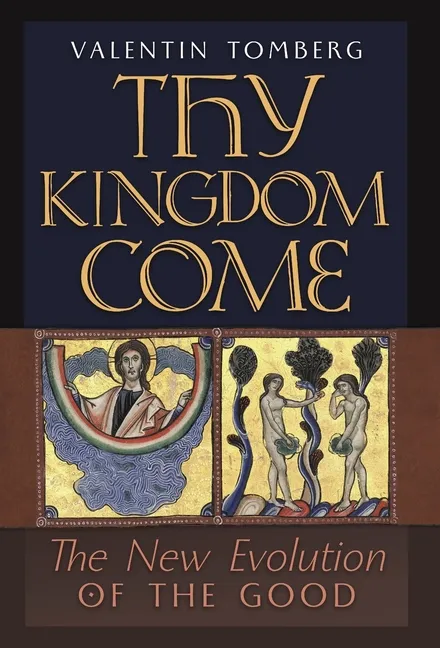
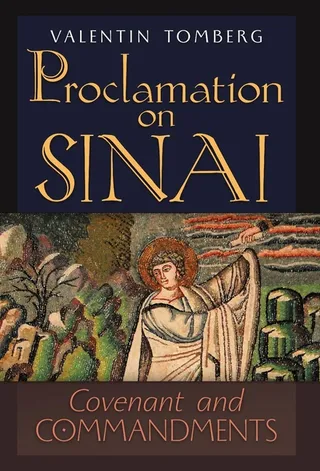
In this study, written largely during the winter of 1966-1967, Valentin Tomberg leads the reader into the strata of a deeper reality. The path begins with knowledge of the kingdom of nature, looked at from two points of view: Darwin's evolutionary "fallen nature" of the serpent (whose guiding principle is "the collective will to power") and the cooperation, association, and social collectivism also apparent in nature (pointing to a region of created beings rather than to an evolutionary "origin of species"). Tomberg then asks whether human beings are permitted to do everything they can do, which brings him to the kingdom of man. Here the "pure humanism" of this kingdom manifests itself. But we are further called to raise ourselves out of both the kingdom of nature and the "pure humanism" of the kingdom of man, to the kingdom of God. For this, the Sermon on the Mount informs us of our true nature and points our way. If, in the old natural evolution, the solution was "you shall be as God" (by which the serpent meant "you shall be as God without God"), then the Sermon on the Mount promises "you shall be as God in God." When humanity shall at last have understood this rightly, there will, according to Tomberg, be a new historiography telling first of temptations, deserts, errors, and the way of purification. In this book, Tomberg shows himself to be its forerunner.
Valentin Tomberg
Valentin Tomberg (Feb. 27, 1900-Feb. 24, 1973) was born into a Lutheran family in St. Petersburg, Russia. As an adolescent, he was drawn to the hermetic Martinism of G.O.Mebes, as well as to Theosophy and the mysticism of Eastern Orthodoxy. Tomberg's mother was killed by looters during the Russian Revolution, after which Valentin and his father fled to Tallinn, Estonia, where Tomberg studied languages and comparative religion at the University of Tartu. As a young man, he was strongly influenced by Vladimir Soloviev and had a personal experience of the Sophia at a cathedral in Holland. In 1925, he joined the Anthroposophical Society, under whose auspices he lectured in Holland and England and wrote on his understanding of the Bible, Anthroposophy, and esoteric Christianity. During World War II, he left the Anthroposophical Society and its internal struggles and converted to Catholicism. In 1948, he moved to England, where he became a translator for the BBC and monitored Soviet broadcasts during the Cold War, while continuing his devotion to meditation practice and further writing on his esoteric insights. In 1960, he retired to Reading near the River Thames. He died while vacationing in Majorca. The best-known work of his later life is Meditations on the Tarot: A Journey into Christian Hermeticism, written anonymously.
More by Valentin Tomberg


Why Readwise Books?
Readwise Books is an ebook & audiobook platform that automatically logs how much you and your friends read, making it fun and easy to read more. Learn more →