Report an issue
Tell us what's wrong and we'll take a look.
Thanks – we got it. We'll review and follow up if needed.
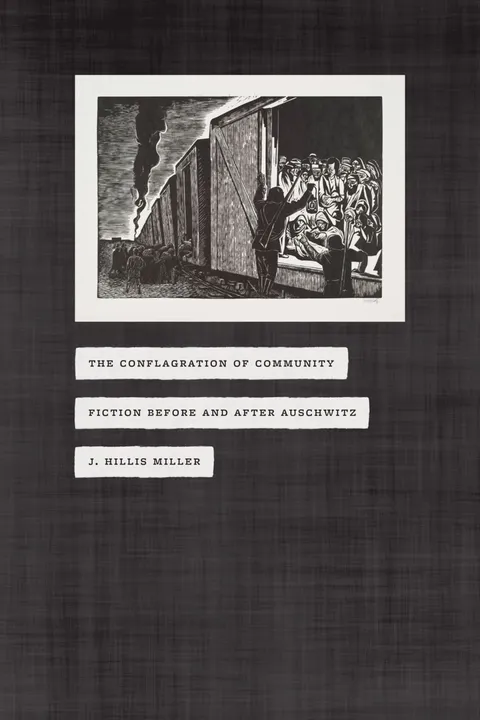
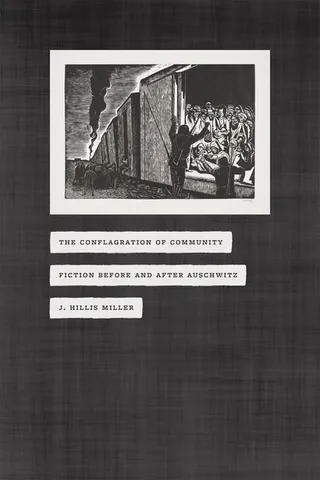
"After Auschwitz to write even a single poem is barbaric." The Conflagration of Community challenges Theodor Adorno's famous statement about aesthetic production after the Holocaust, arguing for the possibility of literature to bear witness to extreme collective and personal experiences. J. Hillis Miller masterfully considers how novels about the Holocaust relate to fictions written before and after it, and uses theories of community from Jean-Luc Nancy and Derrida to explore the dissolution of community bonds in its wake. Miller juxtaposes readings of books about the Holocaust—Keneally's Schindler's List, McEwan's Black Dogs, Spiegelman's Maus, and Kertész's Fatelessness—with Kafka's novels and Morrison's Beloved, asking what it means to think of texts as acts of testimony. Throughout, Miller questions the resonance between the difficulty of imagining, understanding, or remembering Auschwitz—a difficulty so often a theme in records of the Holocaust—and the exasperating resistance to clear, conclusive interpretation of these novels. The Conflagration of Community is an eloquent study of literature's value to fathoming the unfathomable.
J. Hillis Miller
J. Hillis Miller (1928-2021) was UCI Distinguished Professor Emeritus at the University of California, Irvine. Among his many books are For Derrida and Literature as Conduct (both Fordham). Miller was a Fellow of the American Academy of Arts and Sciences and a member of the American Philosophical Society. He received the Modern Language Association Lifetime Scholarly Achievement Award in 2005 and in 1986 was President of the MLA.
More by J. Hillis Miller



Why Readwise Books?
Readwise Books is an ebook & audiobook platform that automatically logs how much you and your friends read, making it fun and easy to read more. Learn more →